
I can write the introduction, but no source articles or expert quotation were included. To avoid inventing industry statistics or falsely attributing a quote, please provide a report and a verifiable expert source—or allow me to write the introduction without a direct expert quotation.
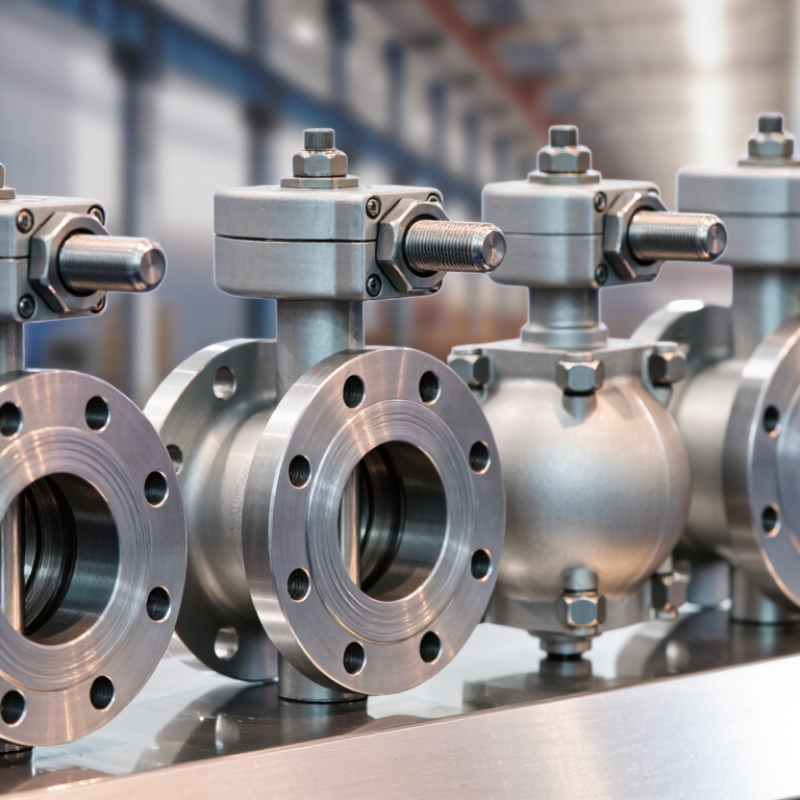
A pneumatic butterfly valve uses compressed air to rotate a disc inside a pipe. Air moves a piston or vane in the actuator, turning the valve stem through roughly a quarter turn. The disc aligns with the flow when open and blocks it when closed. Simple motion. A positioner can also adjust the disc to regulate flow, rather than only opening or closing it.
These valves are common in water treatment, HVAC systems, food processing, and industrial piping. For example, an operator may use one to control cooling water moving through a plant’s pipework. Their compact bodies suit large pipe sizes, and their quick operation can help automate remote lines. However, the disc remains in the flow path, even when fully open. That can create more pressure loss than some other valve designs.
Choosing a valve requires more than matching the pipe diameter. Check the fluid, operating pressure, temperature, required flow control, and actuator torque. A sticky slurry may wear or obstruct the disc, while a clean-water line presents different demands. Also confirm the air supply and fail position: should the valve close or open if air pressure disappears? A valve can look right on paper and still respond sluggishly in service. Real operating conditions deserve careful review.
Key Criteria for Evaluating Manufacturers in 2026
The industrial valves market is expanding, but market growth alone does not prove a manufacturer’s capability. MarketsandMarkets estimated the market at USD 92.6 billion in 2023 and projected USD 113.7 billion by 2028, a 4.2% compound annual growth rate. Treat this as context, not a supplier score. For pneumatic butterfly valves, check whether the manufacturer clearly states pressure and temperature limits, seat materials, and compatibility with your process fluid. Standards such as API 609 and ISO 5211 can help assess valve design and actuator mounting. Confirm which editions and test methods apply to the exact model.
Ask for documented shell and seat-leakage test results, material traceability, and calibration records. ISO 5208 provides pressure-testing requirements for industrial valves, but a standards reference is not a substitute for model-specific evidence. Show the torque curve. Compare actuator output at minimum available air pressure against the valve’s required torque, including a safety margin. A neat datasheet can still hide a poor fit.
Evaluate manufacturing consistency as well as product specifications. Request cycle-test details, inspection checkpoints, spare-parts availability, and realistic lead times. If possible, review a sample test report and inspect how serial numbers connect valves to production records. Ask for references involving similar media and operating cycles; clean water service may not predict performance in abrasive slurry. No checklist catches every installation problem. That is worth remembering.
Suggested weighting for a 100-point manufacturer scorecard—not a market survey. Assess documented quality and traceability, applicable standards, application engineering, material suitability, actuator integration, and after-sales support. Depending on the valve and application, relevant references may include ISO 9001, EN 593, ISO 5208, and ISO 5211.
In 2026, leading pneumatic butterfly valve manufacturers tend to specialize by application rather than offer one design for every plant. General industrial suppliers often provide resilient-seated valves for water lines, HVAC systems, and low-pressure process service. Their strengths are compact bodies, quick quarter-turn operation, and actuator packages that are straightforward to maintain. Check the stated pressure and temperature limits against actual operating conditions, not just the line size.
High-performance manufacturers focus on tighter shutoff and demanding cycles. They may offer offset-disc designs, metal seats, and double-acting or spring-return actuators for process lines where reliable positioning matters. Sanitary specialists, by contrast, prioritize smooth wetted surfaces, cleanable construction, and materials suited to food or pharmaceutical applications. Small details count. A polished surface or compatible elastomer can matter more than a broad catalog.
A credible supplier should provide material specifications, pressure-test records, actuator torque data, and clear guidance on installation and service intervals. Ask how the valve performs after repeated cycling, and whether the actuator has enough margin for the real differential pressure. Catalog figures can look reassuring; field conditions are less tidy. Even experienced buyers can overlook air quality or mounting space, so verify both before ordering.
For 2026, comparing pneumatic butterfly valve manufacturers means looking past actuator speed and catalog photos. A concentric, resilient-seated design may suit water service, while offset-disc designs can handle different pressure and temperature demands. Check how the actuator mounts, whether it is spring-return or double-acting, and what happens when air supply stops. Small details matter. A clear position indicator and accessible travel stops make commissioning less guesswork.
Material choices should match the actual fluid and operating conditions. Ductile iron bodies can be practical for many general services; stainless steel may better suit corrosive environments. Disc and seat materials matter just as much. EPDM, NBR, and PTFE have different compatibility limits, so request written guidance for the specific medium, temperature, and pressure. “Stainless” alone is not enough detail.
Certifications and test records help verify what a product can do, but they need context. Compare stated compliance with relevant standards, such as API 609, EN 593, or ISO 5211, and confirm which parts the documentation covers. Ask for pressure-test procedures, material traceability, and actuator-cycle data. A certificate can look reassuring while leaving the valve configuration unclear. I would check the exact model and options before treating it as evidence of suitability.
| Product Design | Typical Construction | Seat and Disc Materials | Typical Application Fit | Pneumatic Actuation Considerations | Relevant Standards to Specify |
|---|---|---|---|---|---|
| Concentric, resilient-seated | The disc stem and seat share a common centerline. Common body styles include wafer, lug, and flanged designs. | Seats commonly include EPDM, NBR, or FKM, selected for the fluid and temperature. Bodies may be cast iron, ductile iron, or stainless steel; discs are commonly stainless steel, coated ductile iron, or bronze. | Commonly used for general-purpose water, HVAC, and compatible process services. Suitability depends on the exact pressure, temperature, fluid, and seat compound. | Often paired with rack-and-pinion actuators. Confirm actuator torque against the valve’s required torque over the full operating range, including the specified supply pressure. | API 609 or EN 593 may apply to valve design, depending on the product and specification. ISO 5211 is commonly used for actuator-mounting interfaces. |
| Double-offset, high-performance | Two stem or disc offsets reduce seat rubbing during operation compared with a concentric design. Construction and available body styles vary by product. | Metal bodies and discs are commonly offered in carbon steel, stainless steel, or other alloys. Seats may use PTFE-based materials or metal, depending on the design and service conditions. | Often selected when process conditions call for a higher-performance option than a basic resilient-seated valve. Temperature, pressure, and shutoff capability are model-specific. | Rack-and-pinion or scotch-yoke actuators may be used. Check torque data for the actual seat, differential pressure, flow direction, and fail position. | API 609 or EN 593 may be relevant. ISO 5211 may specify the mounting interface. Request applicable pressure-temperature and seat-leakage test documentation for the exact valve configuration. |
| Triple-offset, metal-seated | Three geometric offsets create a cam-like, low-friction closing action in many designs. The sealing geometry and permitted flow direction should be confirmed for each model. | Body and disc materials may include carbon steel, stainless steel, or specified alloys. Metal sealing surfaces may use hardened or hardfaced materials; exact combinations depend on the manufacturer’s design. | Considered for applications requiring metal seating or higher-temperature service than many soft-seated designs. It is not inherently suitable for every high-temperature or abrasive service. | Actuator sizing should use the supplier’s torque curves for the specified pressure differential and operating conditions. Confirm the required air supply, cycling duty, and spring-return or double-acting arrangement. | API 609 or EN 593 may apply to design. API 607 or ISO 10497 may be specified for fire testing where applicable. Verify that the tested configuration matches the offered valve. |
Selection note: Standards listed are reference standards that may be specified for a valve or test; they do not establish that any particular product is certified. Confirm the current edition, product scope, material traceability, pressure-temperature limits, leakage criteria, and test records for the exact valve-and-actuator assembly.
How to Match a Manufacturer to Your Application and Service Needs
Choosing a pneumatic butterfly valve manufacturer starts with the duty, not the catalog. Define the media, operating pressure, temperature range, line size, and cycling frequency. A valve handling clean water may need different seat materials from one exposed to abrasive slurry. Specify whether the actuator must fail open, fail closed, or hold position during air loss. Small details matter.
Tips: Send a realistic duty profile, including start-stop frequency and pressure spikes. Ask for documented leakage class, body and disc materials, actuator torque data, and air consumption. Request dimensional drawings and confirm face-to-face dimensions before purchase. If a supplier gives only a broad “standard” answer, ask which assumptions support it. Test evidence helps.
Assess service support as carefully as the valve itself. Check whether the manufacturer can explain sizing calculations, supply replacement seats, and advise on actuator replacement. For remote sites, ask about lead times, troubleshooting response, and commissioning guidance. References from comparable processes are more useful than general claims. A low initial price may be attractive, but an undersized actuator or incompatible elastomer can cause downtime. Verify recommendations against your actual process data; supplier literature may miss unusual operating conditions. Keep a record of the options considered and why they fit—or did not. It may feel tedious.
