10 Best Rubble Bags for Construction and Demolition
Construction and demolition cleanup can change quickly, from a room renovation to a full site clear-out. Broken bricks, plaster, timber offcuts, and dusty rubble all place different demands on a container. A suitable Rubble Bag can make collection and transport more manageable, but the right choice depends on the material, load, and handling method.
Capacity is only part of the decision. Check the manufacturer’s stated working load, bag dimensions, fabric strength, seam construction, and lifting-loop design. Small details matter. A bag that fits through a narrow doorway may be more useful than a larger option, while sharp fragments can strain fabric and seams. Never exceed the stated load limit, and follow the manufacturer’s instructions for filling, lifting, and disposal.
This guide compares ten Rubble Bag options for construction and demolition work. It focuses on practical features, including durability, capacity, ease of handling, and suitability for common debris. Conditions vary between sites, and product specifications can change, so confirm current details before buying. No single bag suits every job. The best choice is one that matches the debris and the way your crew will move it. Even careful comparisons have limits; real-world handling can reveal issues that a product description does not.
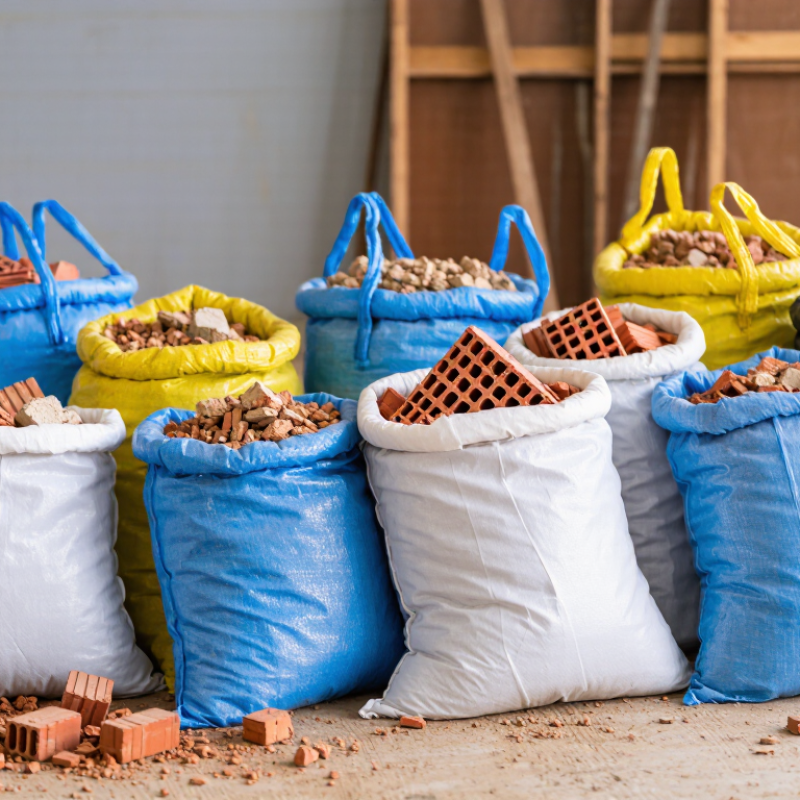
What Rubble Bags Are and How They Are Used
Rubble bags are heavy-duty containers for collecting broken masonry, tiles, plaster, soil, and other renovation debris. Unlike small household sacks, they are designed to handle rough, dense waste, though their capacity and safe load vary. Check the stated weight limit before filling one. A bag can look half-empty and still be too heavy to lift.
On site, place the bag on firm, level ground near the work area, but keep it clear of walkways and doorways. Add debris steadily, spreading heavy pieces rather than piling them in one corner.
Wrap or separate sharp fragments where practical; jagged tile can tear fabric, especially near a seam. Don’t drag a full bag across concrete. It may split, and cleanup takes longer than careful loading.
Keep the opening accessible, and leave room to close or secure it as directed. Collection services may also restrict contents or require specific handling, so check before arranging removal.
Not every job needs a rubble bag. For very heavy chunks or large volumes, a different container may be safer. It is easy to underestimate the weight. A little extra planning helps, though site conditions rarely go exactly as expected.
Key Features to Compare When Choosing Rubble Bags
Choosing rubble bags means matching fabric, seams, and lifting points to the waste. The U.S. Environmental Protection Agency’s 2020 construction and demolition materials report estimated 600 million tons of debris generated in 2018. It estimated 455 million tons were recovered and 145 million tons landfilled. Those figures show why reliable sorting and bag performance matter on busy sites.
Compare safe working load, not just volume. A large bag can still be unsuitable for dense concrete or wet soil. Check that its rating is clear and that lifting loops and seams are reinforced. Small details matter. Inspect stitching and corners, where sharp tile or timber can concentrate stress. Use bags designed for the expected debris, and avoid overfilling them.
Also consider puncture resistance, weather exposure, and storage space. Woven polypropylene may suit bulky, dry waste, while coated or lined options can help contain dusty material. Confirm whether the bag is intended for single use or repeated handling. Labels can be easy to overtrust; check the actual load rating and construction. A practical test is to examine a sample with the debris your crew handles, since site conditions rarely match a tidy product description.
Rubble Bag Materials, Sizes, and Load Ratings
Rubble bags differ in fabric, dimensions, and tested load capacity; appearance alone tells you little. Woven polypropylene is common because it handles rough debris better than thin plastic, but sharp tile edges can still cut it. For repeated handling, inspect seams, lifting loops, and abrasion before filling. Small bags suit hand-carrying and tight interiors; larger bulk bags reduce trips but need compatible lifting equipment and clear access. More volume is not automatically better.
Weight is the catch. Concrete and wet soil can exceed a bag’s marked rating before it looks full. The US Environmental Protection Agency estimated that construction and demolition activities generated 600 million tons of debris in 2018, underscoring the scale of material that needs careful handling. For bulk bags, check the stated safe working load and the supplier’s test documentation; ISO 21898 sets requirements for flexible intermediate bulk containers, but not every rubble sack is one. Keep loads below the label limit, distribute dense pieces evenly, and avoid dragging filled bags across sharp ground. That judgment can be wrong. A quick visual check cannot replace a rating label or a documented inspection.
10 Best Rubble Bags for Construction and Demolition
The best rubble bag depends on the debris, the carry distance, and how the bag will be lifted. For dense brick and concrete, choose heavy-duty woven polypropylene or reinforced-seam sacks. They resist punctures better than thin general-purpose bags. Gusseted bags stand open more easily, while compact sacks suit small repair jobs. Small jobs differ.
For larger cleanups, consider lifting-loop bulk bags, reusable woven bags, and wide-mouth builder bags. Check the safe working load printed on the bag, and never assume every large bag can hold the same weight. Mesh bags allow airflow and suit dry, sorted material, but they do not contain dust or fine fragments. Waterproof-lined bags help with damp debris, though trapped moisture can make loads heavier. Check the seams.
Outdoor projects may benefit from UV-resistant fabric, which can tolerate sun exposure better during temporary storage. Tear-resistant plastic sacks are convenient for lighter mixed debris, but sharp tile edges can still split them. Clear or marked bags also make separating wood, masonry, and other materials easier. In practice, sorting takes extra time, and crews do not always keep it up. Still, matching bag type to waste usually prevents avoidable spills. Keep loads manageable, tie closures securely, and follow local disposal guidance for materials requiring special handling.
How to Fill, Handle, and Dispose of Rubble Bags Safely
Before filling a rubble bag, check its stated capacity, seams, and lifting loops. Place it on firm, level ground, then add debris gradually. Keep the load balanced and stop below the marked limit. A half-full bag can still be awkward if bricks shift or sharp edges catch the fabric. Wear gloves, eye protection, and sturdy boots; dampen dusty debris rather than sweeping it dry. Concrete and masonry dust can contain respirable silica. OSHA’s construction standard sets an eight-hour exposure limit of 50 micrograms per cubic meter, so cutting or breaking these materials calls for proper dust controls.
The scale is substantial: the U.S. EPA estimated 600 million tons of construction and demolition debris in 2018, more than twice the amount of municipal solid waste. That figure is a reminder to sort materials instead of treating every bag as mixed waste. Keep concrete, brick, wood, and metal separate when local facilities request it, and confirm acceptance rules before hauling. Never lift a loaded bag by one loop or stand beneath a suspended load. Use suitable lifting equipment only with compatible, undamaged loops. OSHA’s construction housekeeping rule requires debris to be kept clear of work areas and passageways. Small details matter. An overloaded bag may seem efficient, but it is harder to control and easier to damage.
10 Best Rubble Bags for Construction and Demolition — How to Fill, Handle, and Dispose of Rubble Bags Safely
Approximate weight of common demolition materials per cubic foot
Typical unit weights are approximately 150 lb/ft³ for concrete, 120 lb/ft³ for brick, 105 lb/ft³ for gravel, and 100 lb/ft³ for soil. Actual weights vary with moisture, composition, and compaction. Check the bag’s safe working load, fill it gradually, and never exceed its rated capacity.