
Who Is the Best Standard Conveyor Manufacturer in China?

Choosing the best Standard Conveyor manufacturer in China is not a simple price comparison. A line may look efficient in a brochure, yet struggle when cartons arrive unevenly or dust settles around its rollers. Buyers need evidence of load capacity, belt quality, motor selection, safety controls, and after-sales support. Small details matter.

The market is growing, but figures need careful reading. Grand View Research estimated the global conveyor belt market at about US$6.4 billion in 2023 and projected continued growth through 2030. That report covers conveyor belts, not every standard conveyor system, so it should not be treated as a direct measure of manufacturer quality. Manufacturing pioneer Henry Ford wrote, “Nothing is particularly hard if you divide it into small jobs.” His observation fits conveyor design: a reliable line depends on many well-engineered parts working together.

Look past the polished product photos. Ask for drawings, component specifications, testing records, and references from comparable installations. Check whether the supplier can explain how it handles belt tracking, maintenance access, and spare parts. A low quote can still be the right choice—but only when the scope is clear. I would also question any ranking that names one company as “best” without stating the application. A food-packaging line and a warehouse parcel conveyor face different demands. This guide examines practical criteria for comparing Chinese manufacturers, including customization, quality assurance, delivery, and service, so buyers can make a decision grounded in their own operating conditions.
Who Is the Best Standard Conveyor Manufacturer in China?

What Defines a Standard Conveyor and Its Common Applications

A standard conveyor is a modular material-handling system built around commonly specified parts, such as a frame, belt or rollers, drive, and support legs. Its width, length, speed, and load capacity are selected for a defined task. “Standard” does not mean one size fits every facility. A narrow belt may suit small cartons, while heavy components need stronger rollers and a sturdier frame. Small details matter. Transfer points, floor space, and cleaning access can affect performance as much as the conveyor itself.

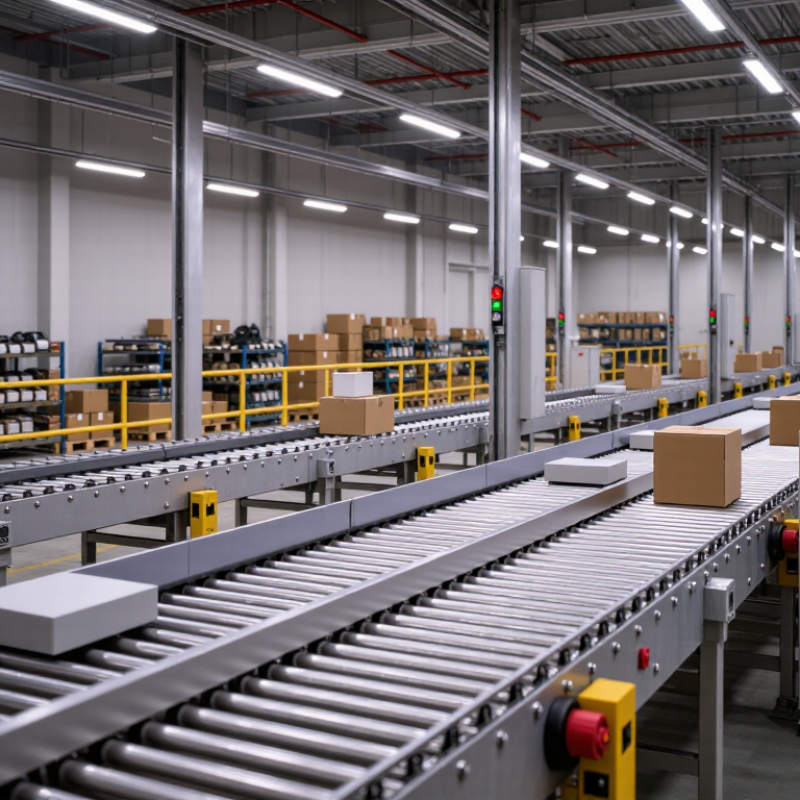
These systems commonly move cartons between packing stations, carry components along assembly lines, and feed parcels toward sorting areas. In warehouses, roller conveyors can connect picking, packing, and dispatch zones with fewer manual lifts. Belt conveyors handle products that might slip between rollers, including small packages. Food processing may also use conveyors, but product-contact materials and cleaning requirements must match the application. A conveyor that works well on a dry packaging line may struggle in a washdown area. Teams should check load variation, operating hours, noise, and maintenance access before choosing a configuration; those requirements are sometimes underestimated during early planning.

How China’s Standard Conveyor Manufacturing Industry Is Organized

China’s standard conveyor industry is organized around three layers: component makers, equipment builders, and project integrators. Component shops produce rollers, frames, belts, drives, and guards; builders assemble repeatable belt, roller, or chain units. Integrators connect these units to sorters, lifts, controls, and warehouse software. That division is practical, but not perfectly clean. Some factories make everything; others depend on nearby suppliers for motors and electrical cabinets. The China Federation of Logistics and Purchasing reported that China’s total social logistics value reached 352.4 trillion yuan in 2023, up 5.2% year on year. This signals a broad material-handling market, not conveyor sales specifically. China’s National Bureau of Statistics reported 429,534 industrial robots produced in 2023, a sign of growing automation capacity, though not a direct conveyor measure.

A capable standard-conveyor manufacturer usually competes through repeatability: consistent shaft alignment, safe guarding, stable belt tracking, and accessible tensioners. Ask for load tables, motor-sizing assumptions, noise data, and a test run under your product’s actual weight. Look closely at welded joints and belt edges. Small defects travel. Factory capacity alone can mislead. Check whether drawings, spare-parts lists, and installation support match the quoted scope. China’s supply clusters can shorten sourcing time, yet inconsistent component quality may complicate maintenance. A confident sales promise still needs evidence. Compare measured throughput and service response, not catalogue claims.

How China’s Standard Conveyor Manufacturing Industry Is Organized

A typical value-chain sequence, from component supply to end-user operation.

The bars show sequence only—not market share, company rankings, or measured industry size. In practice, manufacturers may handle several stages, while suppliers and system integrators contribute specialized components and services.

Which Criteria Matter When Comparing Chinese Conveyor Manufacturers

Choosing the best standard conveyor manufacturer in China starts with the job the equipment must do. Define the product size, target throughput, conveyor length, and operating hours. A belt carrying light cartons needs different support from one moving dense parts. Be specific.

Compare engineering capability, not just catalog dimensions. Ask for drawings that show belt width, frame material, drive location, and transfer points. Check whether speed controls and guards suit your production line. For dusty, damp, or washdown areas, ask how bearings, joints, and electrical components are protected. Small details matter.

Quality evidence should be concrete. Request material specifications, inspection records, and a clear description of factory testing. If possible, review a comparable installation or speak with a reference customer. A low quotation may omit installation, spare parts, or control integration, so compare the full scope. Also assess response times and the availability of replacement belts and rollers. No checklist removes every risk. A factory visit can reveal tidy assembly work, but it may not show how problems are handled after delivery. Ask awkward questions, and note when answers remain vague.

Who Is the Best Standard Conveyor Manufacturer in China? — Which Criteria Matter When Comparing Chinese Conveyor Manufacturers

Use this framework to compare suppliers consistently. The suggested weights are an evaluation template, not an industry standard. Score each supplier from 1 (poor or unverified) to 5 (excellent and documented), then calculate: score ÷ 5 × weight.

Comparison criterion Suggested weight What to compare Evidence to request Score (1–5)
Application and technical fit 20% Whether the proposed conveyor suits the product, duty cycle, environment, layout, and required throughput. A proposal stating conveyor type, belt or roller dimensions, speed, load, capacity assumptions, operating conditions, and exclusions. —
Design quality and customization 15% How clearly the design addresses interfaces, transfer points, guarding, access, maintenance, and site constraints. General arrangement drawings, interface list, material specifications, and documented design review or revision process. —
Safety and regulatory approach 15% Whether hazards and applicable destination-market requirements are addressed in the equipment design and documentation. Risk assessment, guarding details, emergency-stop arrangement, electrical documentation, and a list of applicable standards or regulations. Confirm requirements for the installation location. —
Manufacturing and quality controls 15% The consistency and traceability of purchasing, fabrication, assembly, inspection, and testing. Quality-management documentation, inspection and test plans, material records where relevant, and sample inspection reports. Verify certificates and their scope with the issuer when needed. —
Testing and acceptance 10% Whether operating performance and agreed requirements are checked before shipment and at commissioning. A written factory acceptance test plan, measurable acceptance criteria, test records, and commissioning procedure. —
Delivery and project management 10% Clarity of schedule, responsibilities, change control, packaging, shipping terms, and installation coordination. A milestone schedule, responsibility matrix, documented change process, packing plan, and clearly stated delivery terms. —
After-sales service and spare parts 10% Availability of technical support, warranty terms, troubleshooting guidance, and replacement parts. Written warranty conditions, support contact and response process, recommended spare-parts list, and parts identification documentation. —
Total cost and commercial clarity 5% Whether the quotation makes the scope, exclusions, payment terms, shipping, installation, and ongoing costs transparent. An itemized quotation, clearly stated assumptions and exclusions, payment schedule, and any separately priced services or spare parts. —
Total 100% Compare suppliers using the same project requirements, scoring scale, and documentary evidence.

How Leading Manufacturers Differ in Products and Capabilities

The best standard conveyor manufacturer in China depends on the material, layout, and working conditions. A useful comparison starts with the product range. Some manufacturers focus on belt conveyors for cartons and light packages. Others offer roller, chain, or modular-belt systems for heavier loads or frequent transfers. Check belt width, frame material, drive options, and rated capacity against your actual operating needs. A specification sheet matters. So does the build behind it.

Manufacturers also differ in engineering support and quality control. Ask whether they can review a layout drawing, confirm motor sizing, and explain how they test frames, rollers, and belt tracking. Clear answers reveal more than a long product list. Reliable suppliers can provide drawings, installation guidance, spare-part details, and realistic lead times. Requesting a sample inspection or a reference project can help verify these claims. Small details count.

Service capability is easy to overlook. A conveyor may fit the floor plan but still create awkward access for cleaning or maintenance. I would check guard placement and belt-tension adjustment in person when possible. Specifications do not show every practical weakness. Even experienced buyers can miss one. Comparing manufacturers by product fit, engineering depth, inspection records, and after-sales support gives a more grounded basis for choosing.

How to Select the Best Manufacturer for Your Requirements

Choosing a standard conveyor manufacturer in China starts with your process, not a ranking. Map the material, load, speed, and shifts your line must handle. A belt carrying sealed cartons needs different features from one moving warm, abrasive parts. Measure the available floor space, too; a transfer point can consume more room than expected. Small details matter.

Ask for drawings, component specifications, and a clear explanation of how the proposed conveyor fits your layout. Check whether the manufacturer can discuss belt width, frame material, motor capacity, guards, and maintenance access in practical terms. Request references for projects with similar loads or operating conditions, then ask what changed after installation. A polished quotation is useful, but it cannot prove performance by itself. I would also compare lead times, spare-part availability, inspection records, and the process for handling design changes. No supplier is perfect, and a lower price may hide extra installation work.

Tips: Send the same written requirements to each candidate. Include photos, dimensions, load details, and expected operating hours. Ask for a sample layout before approval. If an answer is vague, pause and clarify it; I have seen small assumptions become costly rework.