China Top Special Shaped Silicone Tube Supplier?
Finding a China-based supplier for a Special-Shaped Silicone Tube involves more than comparing prices. Custom profiles may include oval, D-shaped, ribbed, or multi-channel sections, each designed to fit a specific assembly. A small change in wall thickness can affect flexibility, sealing, and installation. Details matter. Buyers should share drawings, dimensions, tolerances, operating temperature, and intended media before requesting a quotation. If the design is still evolving, say so; an early sample may reveal issues that a polished drawing misses. Test it. This step can feel inconvenient, but it may prevent costly revisions later.
A capable supplier should explain material options, tooling methods, inspection processes, and production limits clearly. Ask for relevant technical data on silicone compounds, along with sample measurements or test records where applicable. Certifications can help, but check their scope and validity instead of assuming they cover every product. The right partner is not automatically the largest factory or the lowest bidder. Communication, repeatability, and openness about possible failure points often matter more. Still, no supplier can guarantee a perfect fit from a drawing alone. Confirm critical dimensions on approved samples, review packaging and lead times, and document specifications before mass production. This guide outlines practical ways to assess Chinese manufacturers and match their capabilities to real operating conditions—not just product photos.
What Defines a Special-Shaped Silicone Tube? VMQ Rubber Under ASTM D1418
A special-shaped silicone tube has a cross-section designed for a specific fit or function, rather than a simple circular bore. Under ASTM D1418, VMQ identifies a silicone rubber family. The letters indicate methyl and vinyl groups, with Q referring to the silicone backbone. This designation names the material type; it does not define the tube’s dimensions or guarantee a particular performance level. That distinction matters.
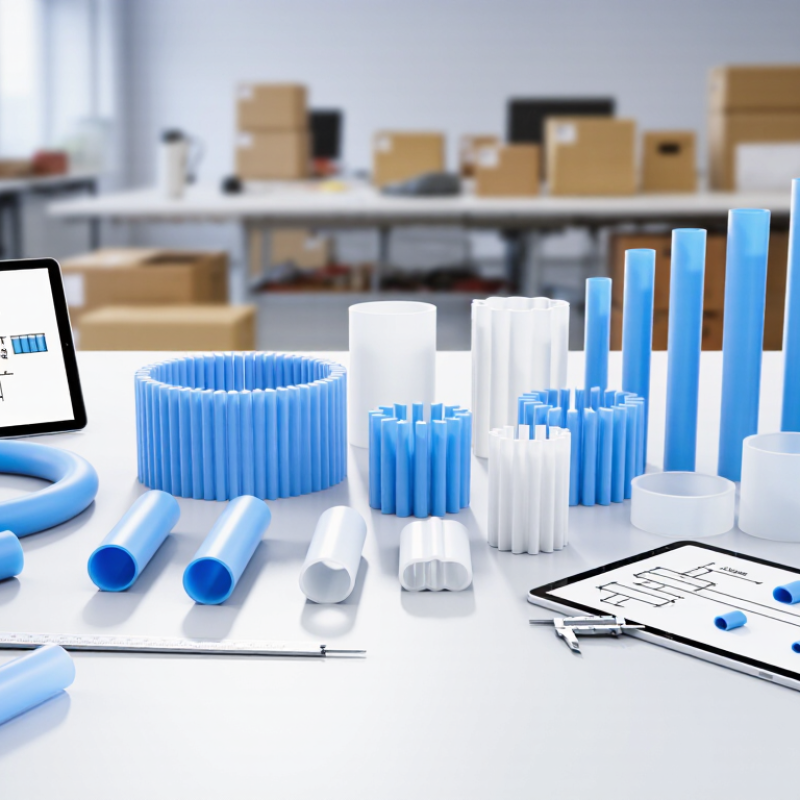
Profile extrusion can produce shapes such as D-sections, channels, or tubes with multiple inner passages. A small change in wall thickness may affect how the tube compresses against a housing. For example, a flat-sided profile may need to seal evenly along a metal panel. Not quite simple. The drawing should show critical dimensions, tolerances, and where the tube contacts other parts.
Material choice still needs testing against the actual operating conditions. Temperature, compression set, fluid exposure, and repeated bending can all affect performance. ASTM D1418 does not replace application-specific testing. A drawing can look precise and still miss a real fit issue. Checking a sample in the assembly can reveal uneven contact, tight corners, or a bore that restricts flow.
How Are Custom Profiles Specified? Measure ID, OD, Wall Thickness, and Tolerances
Custom silicone profiles need more than a shape sketch. Start with a clear cross-section and mark each critical dimension. For round sections, specify the inside diameter (ID), outside diameter (OD), and wall thickness. For irregular profiles, identify reference faces, heights, widths, and any sealing lips or grooves. A labeled drawing helps prevent two people from measuring different features.
Measure samples in a relaxed state, without stretching or squeezing the silicone. Take readings at several points around the part, especially where the wall changes thickness. Silicone is flexible. Calipers can compress it and produce misleading results, so note the measuring method and conditions. A drawing can look precise and still leave room for interpretation.
Set tolerances according to the part’s function, material hardness, and manufacturing process. A seal that must fit a narrow groove may need tighter control than a protective sleeve. Ask the supplier to confirm which dimensions are achievable and how they will be inspected. Specify units, tolerance limits, and whether dimensions apply before or after curing. Prototype checks are useful for catching fit issues early. That small trial may reveal a detail the drawing missed.
Which Performance Data Matter? Shore A Hardness, Tensile Strength, and Elongation
For a special-shaped silicone tube, three figures help explain how the material may behave: Shore A hardness, tensile strength, and elongation at break. Shore A indicates resistance to indentation. A softer compound may bend more easily around a tight corner, while a harder one may better retain its profile. But hardness alone cannot predict sealing performance or service life.
Tensile strength measures the stress a test specimen withstands before breaking. Elongation at break shows how far it stretches before failure. Read these values together, not as competing scores. A tube with high elongation may tolerate pulling during installation, yet its finished shape and wall thickness still matter. Small differences matter. Ask for test results tied to the actual silicone compound, and check the test method, specimen conditioning, and temperature. Results from different methods may not compare cleanly.
A data sheet can still leave gaps. Request samples and test the tube in its intended assembly, especially at bends, ribs, or uneven wall sections. Check whether dimensions recover after compression, and inspect for cracks after repeated flexing. These checks do not replace controlled testing, but they reveal issues a flat specimen may miss. It is easy to overvalue one impressive number; I would be cautious about that. A reliable supplier should explain both the figures and their limits.
China Top Special Shaped Silicone Tube Supplier? - Which Performance Data Matter? Shore A Hardness, Tensile Strength, and Elongation
Indicative performance ranges for cured silicone rubber compounds commonly used in extruded tubing and profiles. Actual results vary with formulation, cure system, specimen preparation, and test conditions; confirm values using the supplier’s current test report.
| Typical Compound Grade | Shore A Hardness | Tensile Strength (MPa) | Elongation at Break (%) | Typical Selection Consideration |
| Soft silicone | 30 ± 5 | 5–8 | 400–700 | Flexible profiles and applications where low indentation resistance is useful. |
| Medium-soft silicone | 50 ± 5 | 6–10 | 300–600 | A general-purpose balance of flexibility and handling strength. |
| Medium-hard silicone | 70 ± 5 | 6–11 | 200–500 | More resistance to indentation while retaining useful flexibility. |
| Hard silicone | 80 ± 5 | 5–10 | 100–300 | Useful when a firmer profile is needed; check bend and assembly requirements. |
Common test methods: Shore A hardness—ASTM D2240 or ISO 48-4; tensile strength and elongation at break—ASTM D412 or ISO 37. Compare results only when the test method, specimen, conditioning, and cure state are equivalent.
What Temperature Range Is Typical? Silicone Grades Often Cover About −60°C to 200°C
China Top Special Shaped Silicone Tube Supplier?
Silicone tubing is often rated for temperatures from about −60°C to 200°C. That range is a guide, not a promise for every tube. The exact limit depends on the silicone grade, exposure time, and working conditions. A tube near a hot machine may behave differently from one tested briefly in an oven. Details matter.
At low temperatures, suitable silicone grades can remain flexible, which helps shaped tubes keep their fit around bends and fittings. At high temperatures, prolonged exposure may cause hardening or loss of strength. Pressure, repeated flexing, and contact with oils or cleaning fluids can change performance too. Small details add up.
For a custom profile, check the supplier’s temperature data for the exact grade and wall thickness. Ask whether the rating applies to continuous service or short-term exposure. Then compare it with the real operating cycle, including temperature peaks and cooling periods. A simple sample test can reveal fit problems or unexpected stiffness. It is not a complete qualification, though. One overlooked point is that a temperature rating alone cannot confirm service life; the full application still needs review.
China Top Special Shaped Silicone Tube Supplier? What Temperature Range Is Typical?
Typical operating temperature ranges vary by silicone formulation. Many standard silicone grades cover approximately −60°C to 200°C.
Ranges shown are indicative, not guaranteed limits. Actual performance depends on the specific compound, exposure duration, and operating conditions; confirm requirements with the material supplier.
How Are Food-Contact Tubes Qualified? Check FDA 21 CFR 177.2600 and Test Reports
For a food-contact silicone tube, a supplier’s compliance statement is only a starting point. FDA 21 CFR 177.2600 covers rubber articles intended for repeated use with food. The tube’s formulation and intended conditions matter. A line carrying warm liquid may need different evaluation from one handling chilled ingredients. That detail matters.
Request a test report linked to the actual tube material, not just a general product family. Check that it identifies the sample, test method, extraction conditions, results, and laboratory. Testing under this regulation can involve water and n-hexane extraction, with limits that depend on the test conditions. A report should make those details clear. If it only says “passed,” ask for the underlying data.
Qualification also means checking traceability and change control. A report for one color, cure system, or formulation may not cover another. Confirm that the supplied tube matches the tested construction and is intended for the food type, temperature, and contact duration in your process. Paperwork can still be incomplete; that is worth questioning. Keep the report with purchasing records and review it when specifications change.