
China Top Water Purification System Suppliers?
Choosing China Top Water Purification System Suppliers requires more than comparing prices and product photographs. A reliable supplier should demonstrate practical manufacturing experience, clear testing procedures, and consistent after-sales support. The right partner understands that water quality varies between factories, hospitals, hotels, and residential buildings. One design cannot serve every location effectively.
This guide examines suppliers through measurable details. These include filtration materials, flow rates, membrane performance, energy use, maintenance schedules, and control-system reliability. Factory audits can reveal important evidence, such as clean assembly areas, calibrated testing equipment, and traceable component records. Certifications may support credibility, but buyers should verify their scope and current validity. A polished certificate alone proves little.
Installation experience matters too. A supplier may provide excellent equipment but weak commissioning support. That weakness can cause pressure fluctuations, leaks, or premature filter replacement. Ask for project references with similar water conditions and daily capacity. Request test reports using realistic feed-water data, not only ideal laboratory samples. Small details matter.
The strongest suppliers communicate limitations honestly. They explain expected recovery rates, replacement costs, and operating risks before signing a contract. Some companies may appear impressive online, yet provide limited technical documentation. That deserves careful reflection. Supplier rankings can also change as factories expand, outsource components, or enter new markets. Therefore, this overview offers a practical starting point, not a permanent verdict. Readers should confirm specifications independently and involve qualified water-treatment professionals before making a final decision.
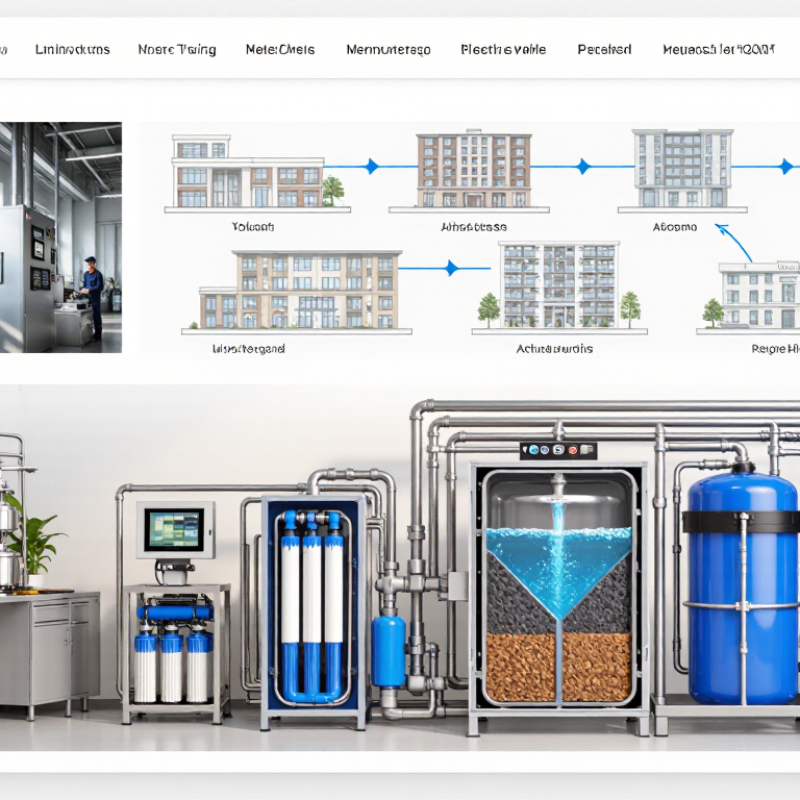
China’s Water Purification System Supplier Landscape
China’s water purification system supplier landscape covers household, commercial, and industrial applications. Suppliers commonly provide reverse osmosis, ultrafiltration, ultraviolet, and media filtration systems. Their strengths vary by project size, water quality, and customization capacity. A compact apartment unit may need a 10-inch filter housing, while a factory may require stainless-steel skids, dosing pumps, and automatic backwashing.
Experienced buyers examine more than price. They check raw water analysis, rated flow, recovery rate, membrane performance, and replacement frequency. For example, a supplier should explain how a 1,000-liter-per-hour RO system performs under local pressure and temperature conditions. Clear drawings, testing records, and traceable component lists show stronger technical discipline. Factory audits and independent laboratory reports add useful confidence.
Not every catalog is precise. Some flow figures look impressive but exclude pressure loss or difficult feedwater. That detail matters. Suppliers should provide pilot testing when scaling from a sample unit to a full production line. After-sales support also differs widely, especially for installation guidance, spare parts, and operator training. Buyers may request English manuals, wiring diagrams, maintenance schedules, and documented quality checks before signing a contract. Small gaps remain possible, even with careful inspection.
| Supplier Segment | Primary Product Scope | Common Treatment Technologies | Typical Applications | Relevant Standards and Certifications | Key Purchasing Criteria | Typical Supply Model |
|---|---|---|---|---|---|---|
| Household Drinking Water System Suppliers | Point-of-use purifiers, under-sink systems, countertop units, faucet-mounted filters and replacement cartridges. | Activated carbon RO UF UV | Homes, apartments, offices, hospitality rooms and small retail environments. | NSF/ANSI 42 for aesthetic effects; NSF/ANSI 53 for selected health-effect claims; NSF/ANSI 58 for reverse osmosis systems; NSF/ANSI 55 for ultraviolet microbiological treatment. | Filtration claims, replacement-filter availability, wastewater ratio for RO, electrical safety, noise, installation requirements and after-sales support. | OEM/ODM manufacturing, private-label production, distributor supply and online retail fulfillment. |
| Commercial Water Purification Suppliers | Higher-flow drinking-water systems, bottleless dispensers, commercial RO units, pre-treatment assemblies and modular filtration packages. | Multi-stage filtration RO UV Ozone | Restaurants, hotels, schools, hospitals, offices, laboratories and food-service facilities. | NSF/ANSI 42, 53 and 58 where applicable; NSF/ANSI 61 for drinking-water system components; electrical and local plumbing requirements. | Flow rate, peak demand, feed-water quality, sanitation design, service intervals, consumable cost and integration with existing plumbing. | Configured systems, project-based supply, distributor networks and maintenance contracts. |
| Industrial RO and Ultrapure-Water Suppliers | Industrial reverse-osmosis skids, two-pass RO, electrodeionization packages, polishing systems and process-water treatment lines. | Media filtration RO EDI Ion exchange UV | Electronics, pharmaceutical manufacturing, laboratories, power generation, chemical processing and industrial utilities. | ISO 9001 is commonly used for quality management; ISO 14001 may support environmental management; project specifications normally define water-quality limits and validation requirements. | Permeate quality, recovery rate, membrane flux, pretreatment design, automation, instrumentation, clean-in-place capability and validation documentation. | Engineering-procurement-construction projects, skid integration, system customization and long-term technical service. |
| Municipal and Community Water-Treatment Suppliers | Packaged drinking-water plants, containerized treatment units, emergency systems and decentralized community-water solutions. | Coagulation Sedimentation Media filtration Disinfection RO | Municipal waterworks, rural water projects, emergency response, remote communities and public facilities. | Applicable national drinking-water regulations, project-specific public-health requirements, ISO 9001 and local construction or electrical standards. | Raw-water variability, treated-water compliance, operating cost, chemical safety, resilience, remote monitoring and operator training. | Public tenders, turnkey contracts, EPC delivery, packaged plants and operation-and-maintenance agreements. |
| Water Softener and Hardness-Control Suppliers | Point-of-entry softeners, commercial softening systems, anti-scale equipment and brine-management accessories. | Cation exchange Template-assisted crystallization Pre-filtration | Residential buildings, hotels, laundries, boilers, cooling systems and industrial utility water. | NSF/ANSI 44 for residential cation-exchange water softeners; additional local plumbing and discharge requirements may apply. | Hardness capacity, salt and water consumption during regeneration, control-valve reliability, installation space and wastewater handling. | Standardized equipment, OEM production, plumbing-distributor supply and service-based installation. |
| Ultrafiltration and Membrane-Module Suppliers | UF membrane modules, hollow-fiber assemblies, membrane housings and integrated filtration equipment. | Ultrafiltration Microfiltration Backwashing Chemical cleaning | Surface-water treatment, drinking-water pretreatment, wastewater reuse, food processing and industrial process water. | Project-specific performance testing, material compatibility documentation, ISO 9001 and applicable drinking-water component requirements. | Pore-size specification, membrane material, turbidity reduction, operating pressure, backwash frequency, chemical tolerance and module life. | Component supply, integrated skids, technical licensing and customized engineering packages. |
| Disinfection and Sterilization Equipment Suppliers | Ultraviolet reactors, ozone generators, dosing systems and disinfection control packages. | UV-C Ozone Chlorination Advanced oxidation | Drinking water, food and beverage production, aquaculture, swimming pools, wastewater reuse and process-water systems. | NSF/ANSI 55 for UV microbiological water-treatment systems where applicable; electrical safety, chemical-handling and local public-health requirements. | Validated dose, flow range, UV transmittance, contact time, residual control, sensor accuracy, lamp life and maintenance access. | Standalone equipment, integration into treatment trains, project supply and preventive-maintenance service. |
| Water-Testing, Monitoring and Automation Suppliers | Online analyzers, conductivity and pH instruments, flow meters, remote-monitoring platforms and treatment-control panels. | Sensors PLC control SCADA IoT monitoring | Industrial plants, municipal facilities, laboratories, commercial buildings and decentralized treatment stations. | Instrument calibration requirements, electrical and electromagnetic-compatibility standards, ISO 9001 and site-specific control-system specifications. | Measurement accuracy, calibration interval, data logging, alarm functions, communication protocols, cybersecurity and integration capability. | Component sales, system integration, software subscriptions and ongoing calibration or service contracts. |