Why Choose Multi Grip Rivets for Your Next Project?
When embarking on a new project, selecting the right fastener can make all the difference. "Multi Grip Rivets" are becoming increasingly popular among engineers and builders. Industry expert Jane Smith, a renowned mechanical engineer, once stated, "In projects where adaptability and strength are key, Multi Grip Rivets stand out."
These rivets offer versatility that is hard to match. They can accommodate a range of material thicknesses, making them ideal for various applications. Their design allows for secure fastening even under challenging conditions. Consider a construction project where multiple materials are joined. The need for a reliable, adaptable solution is apparent.
Yet, not all users fully understand the advantages of Multi Grip Rivets. Some may overlook them for traditional options. However, the exploration of their benefits reveals their true potential. With the right information, users can make informed decisions. Embracing new fastening technologies typically leads to greater efficiency and stronger results. The choice is clear for those who prioritize quality and innovation.
Benefits of Multi Grip Rivets in Construction and Manufacturing
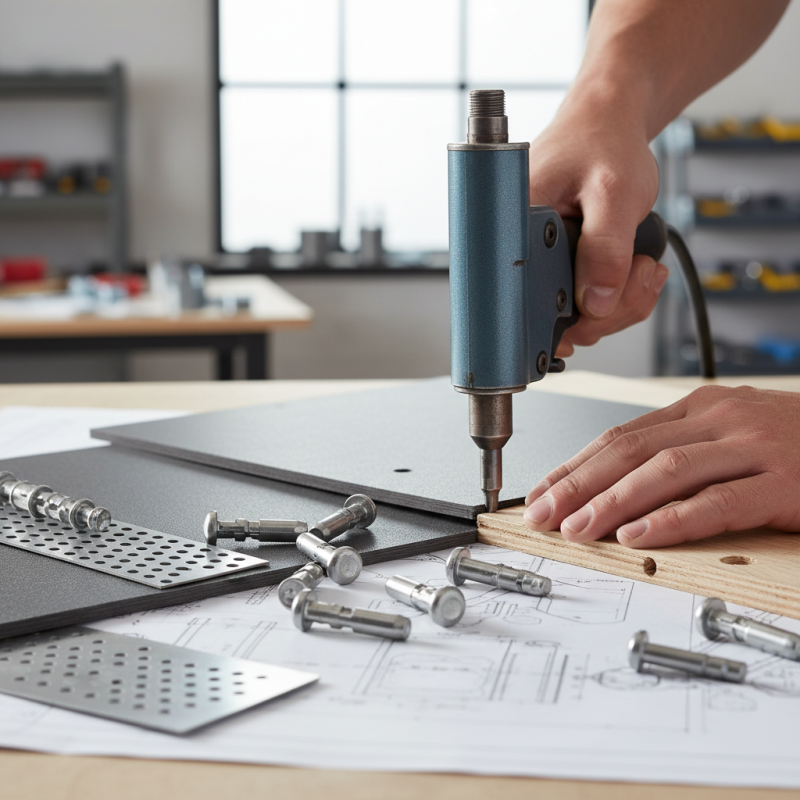
Multi Grip Rivets offer unique advantages in construction and manufacturing. Their adaptability allows them to efficiently join materials of different thicknesses. This flexibility can enhance the productivity of your projects by minimizing the number of rivet sizes needed. Using just one style of rivet simplifies inventory management and reduces costs.
When working with Multi Grip Rivets, consider the material types. Different materials can behave unpredictably with the same rivet size. Experiment with prototypes to see how they perform under load. Keeping a journal of your findings can help in future projects. Always remember that what works well today might not be the best solution tomorrow.
Installation can sometimes be tricky. Practice makes perfect. Take time to master your technique with these rivets. A small mistake can lead to a weak joint. Be patient and precise. Consider taking a class or watching instructional videos. Continuous learning will enhance your skills and the quality of your work.
Versatility of Multi Grip Rivets for Various Materials and Applications
Multi grip rivets offer exceptional versatility across various materials and applications. They are specifically designed to accommodate a range of thicknesses, making them suitable for different substrates, whether in metal, plastic, or composite materials. According to industry reports, nearly 70% of assembly applications benefit from multi grip rivets due to their adaptability. This flexibility allows engineers to simplify their designs while reducing inventory costs.
Moreover, in sectors like automotive and aerospace, multi grip rivets maintain structural integrity under diverse conditions. They provide a strong hold even in environments with high vibrations and temperature fluctuations. Data from the Fastener Technology Institute indicates that using multi grip rivets minimizes assembly time by up to 30%. However, some engineers question their performance in extreme conditions, highlighting the need for thorough testing.
When considering custom projects, multi grip rivets can streamline the manufacturing process. Their availability in various colors and finishes allows for aesthetic integration into products without sacrificing functionality. Yet, there remain concerns about sourcing reliable suppliers for high-quality rivets, as inconsistent quality can lead to structural failures. This calls for careful supplier selection to ensure project success.
Why Choose Multi Grip Rivets for Your Next Project?
| Material | Application | Grip Range (mm) | Shear Strength (N) | Tensile Strength (N) |
| Aluminum | Aerospace Components | 2.0 - 4.0 | 1500 | 3000 |
| Steel | Construction | 3.0 - 5.0 | 2500 | 5000 |
| Stainless Steel | Automotive | 3.5 - 5.5 | 3000 | 6000 |
| Plastic | Electronics | 1.5 - 3.0 | 800 | 1500 |
| Copper | Electrical | 2.0 - 4.2 | 1200 | 2500 |
Comparison of Multi Grip Rivets with Traditional Rivet Types
When comparing multi grip rivets to traditional types, several factors emerge. Multi grip rivets offer versatility. They accommodate various material thicknesses. This adaptability simplifies inventory management. With just one type, you tackle different projects efficiently.
Traditional rivets often require multiple sizes. This means more workspace clutter. You might struggle with alignment during installation. Multi grip rivets have a unique design that enhances grip. They hold materials together more securely. This difference can be crucial in structural integrity.
Tips for using multi grip rivets:
- Ensure proper drilling. The hole should match the rivet size for optimal performance.
- Always check compatibility with the materials. A misfit can lead to failures.
- Lastly, consider weather resistance. Some multi grip rivets are designed for outdoor applications. Choose wisely for long-lasting results.
Installation Process for Multi Grip Rivets: A Step-by-Step Guide
When working with multi grip rivets, understanding the installation process is crucial. Start by gathering your materials: the rivets, a rivet gun, and safety gear. Proper preparation ensures that the installation runs smoothly. Check the thickness of the materials being joined. Multi grip rivets are versatile, accommodating a range of thicknesses.
Tips: Always practice on scrap materials first. This allows you to get comfortable with the rivet gun. Control the pressure while pulling the trigger. Too much pressure can damage the rivet.
Once you're ready, position the rivet in the hole. Ensure that the rivet's mandrel is aligned with the tool. Firmly squeeze the rivet gun's handle. Watch for the mandrel to break off. This indicates a secure connection. Inspect each rivet for uniformity. An uneven installation could weaken the joint.
Tips: Be patient during this process. It may take time to achieve consistent results. If you encounter resistance, check if the rivet is the correct size. Adjust your technique as necessary.
Multi Grip Rivets Performance Comparison
Cost-Effectiveness of Using Multi Grip Rivets for Projects
Multi grip rivets stand out in various projects due to their cost-effectiveness. They can accommodate different material thicknesses without needing multiple types of fasteners. This feature not only simplifies the inventory but also reduces overall expenses. Your project budget will surely benefit from fewer procurement processes. Additionally, the installation process is streamlined, further saving on labor costs.
The versatility of multi grip rivets allows them to be used in various applications, from construction to automotive. This adaptability can be a game-changer for projects with budget constraints. However, it's essential to consider the specific needs of your materials before deciding. Sometimes, the chosen fastening method may not hold as strong under certain conditions. This necessitates careful evaluation. Choosing the wrong rivet could lead to potential rework and additional costs.
While they may offer savings, it’s vital to weigh their performance against cheaper options. Sometimes, investing in high-quality materials may prove more economical in the long run. Making informed decisions can avoid future expenditures and project delays. This approach highlights the importance of thorough research and experience in your choices.