How to Choose the Right Stock Bulk Bags
Stock Bulk Bags look simple on a warehouse floor, but choosing the wrong design can complicate filling, lifting, storage, and delivery. UNCTAD’s Review of Maritime Transport 2024 reports that more than 80% of world trade by volume moves by sea. For many products, a bulk bag may pass through several hands and transport stages before reaching its destination. Its dimensions, safe working load, lifting loops, fabric, and discharge style therefore matter in everyday operations.
Start with the material and handling process. Confirm the required load capacity, filling method, forklift or crane arrangement, and whether the contents need a liner or moisture protection. ISO 21898:2004 sets requirements for flexible intermediate bulk containers used to transport non-dangerous goods; check that a supplier’s documentation matches the intended application. FIBCA’s safe-handling guidance also emphasizes using bags as designed and inspecting them before use. Details count.
A catalog photo cannot confirm how a bag will behave on your floor. Ask for specifications, test documentation, and a sample when practical, then compare them with your actual equipment and storage conditions. Do not choose on price alone. A cheaper bag may not suit a narrow pallet bay or a particular discharge system. This guide explains how to assess Stock Bulk Bags with those practical trade-offs in mind—and where a little uncertainty deserves another question.
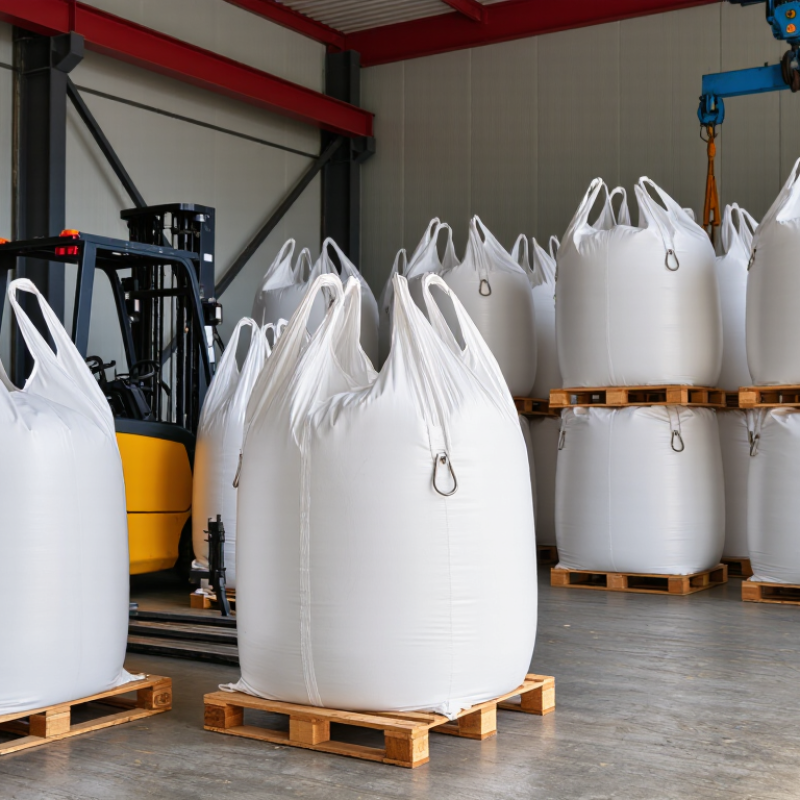
Assess Load Capacity, Contents, and Operating Conditions
Choose a stock bulk bag by the load it must carry, not by its advertised volume alone. Estimate the heaviest fill, then check the bag’s safe working load and any stated safety factor. Dense materials can reach the weight limit before the bag looks full. Leave room for uneven loading and movement during lifting. A small margin matters.
Match the fabric and construction to the contents. Fine, dry material may need a coated or sift-resistant bag, while damp contents call for attention to moisture exposure and storage. Sharp or abrasive pieces can wear fabric at contact points. Check that the filling and discharge openings suit your equipment. Then assess the working conditions: forklift spacing, lift-loop access, stacking height, outdoor exposure, and how often each bag will be moved. A bag stored under a sunny loading-bay roof faces different wear from one kept indoors. Details are easy to miss. Before ordering, compare the product specification with your actual handling setup, and verify dimensions with the supplier. Estimates can be wrong; a sample fill or trial lift may reveal awkward balance or clearance issues.
Evaluate Lifting, Discharge, and Handling Features
How to Choose the Right Stock Bulk Bags
Evaluate Lifting, Discharge, and Handling Features
A bag’s rated capacity matters, but so does the way it will be lifted. Match the safe working load to the heaviest planned fill, then confirm that loop placement suits your forklift, hoist, or frame. Cross-corner loops can be awkward when forks approach from the wrong direction. Check clearance before ordering.
Discharge design affects both flow and control. A bottom spout with a closure can support measured emptying; a flat-bottom bag may suit a different unloading setup. Match the outlet to the material’s flow behavior and the receiving equipment. Fine or cohesive products may bridge, so a wide spout alone is no guarantee. Test with the actual material when possible.
Handling deserves equal attention. Check filled-bag dimensions against pallet footprints, aisle widths, and storage height. The U.S. Bureau of Labor Statistics reported 2.6 million nonfatal workplace injury and illness cases in private industry in 2023. That figure is not specific to bulk bags, but it underscores why lift access and stable handling deserve careful review. Inspect seams, loops, and discharge closures before use. Small details matter. And some layouts look fine on paper, then prove awkward on the floor.
Check Safety Ratings and Regulatory Requirements
A stock bulk bag can look sturdy and still be unsuitable for a particular load. Check its safe working load, or SWL, against the heaviest expected fill, not an average one. The bag’s safety factor and whether it is rated for single or multiple trips also matter. These details should match the way the bag will be filled, lifted, stored, and emptied. Ask for current test records and clear product specifications. Inspect the lifting loops and seams; fraying or uneven stitching deserves attention. Small details count.
Regulatory requirements vary by location and by what the bag will hold. Confirm applicable rules with your safety or compliance team before ordering. If the contents need food-contact or other specialized packaging, verify that the bag’s documentation covers that exact use. Keep records of ratings, inspections, and any handling limits where operators can find them. Paperwork can be tidy while the bag is worn, so check the actual bags on arrival and during use. A rating is not a reason to exceed the stated load or use a damaged bag. When specifications are unclear, pause and ask the supplier or a qualified safety professional rather than guessing.
Match Stock Availability to Storage and Delivery Needs
Stock availability matters only when bags fit your storage space and dispatch schedule. Before ordering, confirm filled dimensions, safe working load, lifting-loop arrangement, and stacking requirements. A bag delivered today can still be unusable if it blocks a narrow aisle. Measure pallet footprints and clear heights, then check a filled sample against rack beams, doorways, and forklift access. Small details matter.
Compare stock on hand with weekly use, supplier lead time, and delivery windows. Keep fast-moving sizes near dispatch; hold special sizes only when repeat demand justifies the space. CSCMP’s 2024 State of Logistics report estimated U.S. logistics costs at $2.3 trillion in 2023, or 8.7% of GDP. MHI’s 2024 industry report found that 55% of surveyed supply chain leaders planned to increase technology investment over five years, underscoring the value of better inventory visibility. A simple reorder point—expected use during lead time plus a buffer—can flag shortages early. It is not foolproof. Demand spikes, limited dry storage, or a late truck can defeat a neat spreadsheet. Review actual picks weekly, and reserve delivery slots for sizes that move fastest.