
10 Eye Shadow Palette Buying Tips for Global Buyers?
Buying an Eye Shadow Palette is no longer a simple color choice. Global buyers now compare pigmentation, safety, packaging, shelf life, and regional demand. The beauty market reached about $590 billion in 2023, and McKinsey expects it to approach $750 billion by 2028. However, reports classify eye makeup differently. Treat broad figures carefully.
Grand View Research valued the global eye makeup market at approximately $14.1 billion in 2023. Its forecast suggests continued growth through 2030, supported by social commerce, premium products, and wider shade ranges. Yet growth does not guarantee product quality. A palette may look impressive online but perform unevenly under store lighting or humid conditions.
Bobbi Brown, makeup artist and beauty founder, once said, “The secret to beauty is simple: be who you are.” That principle matters when assessing an Eye Shadow Palette for international customers. Buyers should examine whether the color story suits local preferences, skin tones, application habits, and climate. A warm-toned palette may sell quickly in one market and remain untouched in another.
This guide presents ten practical buying tips for global buyers. It considers ingredient transparency, color payoff, blendability, packaging durability, minimum order quantities, and supplier documentation. It also discusses cruelty-free claims and recycling information without treating marketing language as proof. Small details matter. A cracked mirror, weak hinge, or missing shade label can damage customer trust.
Some recommendations remain judgment-based. Consumer behavior changes quickly. Therefore, buyers should combine industry reports, supplier samples, customer feedback, and local testing before placing large orders.
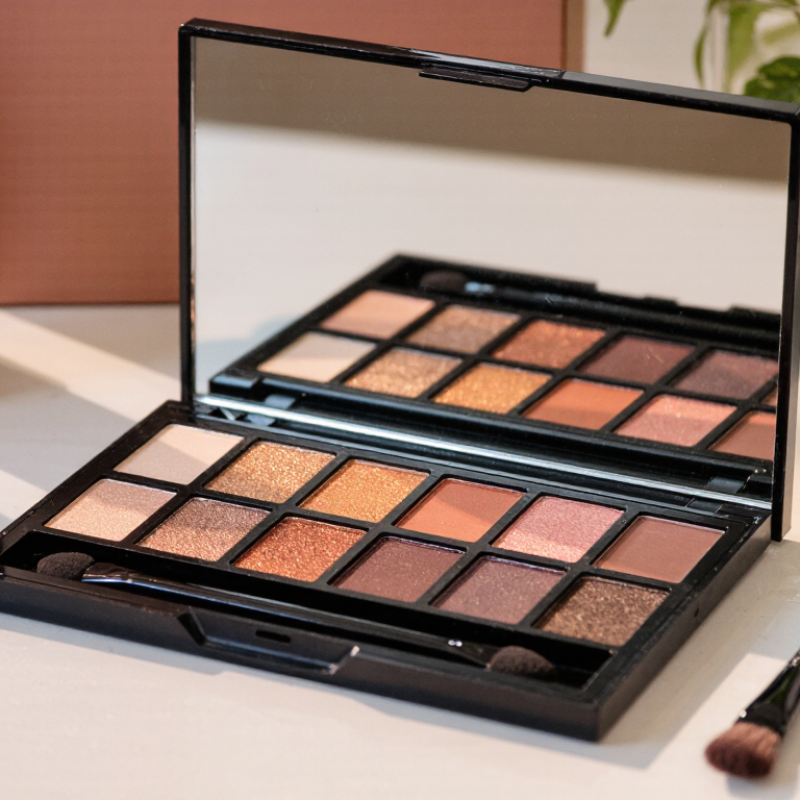
Define Your Eye Shadow Needs and Intended Use
10 Eye Shadow Palette Buying Tips for Global Buyers
Define Your Eye Shadow Needs and Intended Use
Begin with the user, not the palette size. A daily office buyer may need neutral shades, soft finishes, and easy blending. A makeup artist may require stronger pigments, varied textures, and refillable pans. Event users often prefer shimmer, while editorial teams may seek unusual colors. The intended setting changes the ideal palette.
Think about climate and application habits. In humid regions, buyers may value quick-setting formulas and secure packaging. In dry climates, smoother textures can reduce patchy application. Ask whether users apply shadow with fingers, brushes, or sponge applicators. I have seen attractive palettes underperform because the shades looked better in the package than on different skin tones. That mistake is easy to repeat.
Shade testing should include several skin depths and indoor lighting. Check fallout, blend time, color payoff, and removal. Small details matter. A palette for travel should resist broken pans and loose lids. A professional palette should show clear ingredient information, batch details, and consistent production records. Buyers should also review applicable cosmetic requirements in each target market. Compliance documents do not replace practical testing. They support it.
Avoid buying only by trend. Trends fade quickly. A dependable palette may sell better when its colors match real routines. Still, personal preference can distort judgment. Invite independent testers, record their feedback, and keep the results, even when they challenge your first choice.
10 Eye Shadow Palette Buying Tips for Global Buyers: Define Your Eye Shadow Needs and Intended Use
| No. | Buying Dimension | Recommended Choice | Useful Specification or Data | Best Intended Use | Global Buyer Checkpoint |
|---|---|---|---|---|---|
| 1 | Define the primary user | Match the palette to beginners, professional artists, or everyday users. | Beginners usually benefit from 6–12 coordinated shades; artists may need 24 or more shades. | Personal makeup, salon service, makeup education, or professional kits. | Review the target market’s skill level, preferred tutorials, and typical purchase price. |
| 2 | Select the shade range | Choose neutral, warm, cool, colorful, or mixed color families according to demand. | A balanced palette can include light, medium, and deep shades for transition, definition, and highlighting. | Office makeup favors beige and brown neutrals; creative looks may require blue, green, purple, or red tones. | Consider regional color preferences, seasonal demand, and the undertones common among intended users. |
| 3 | Match the finish to the use case | Combine matte, shimmer, satin, and metallic finishes only when they serve a clear purpose. | Everyday palettes often work well with mostly matte or satin shades plus a small number of shimmer shades. | Matte for contouring and workwear; shimmer or metallic for evening, event, and editorial makeup. | Request close-up swatches under different lighting to evaluate texture and reflectivity. |
| 4 | Check pigmentation and buildability | Look for even color payoff that can be applied lightly or layered. | Evaluate one-swipe payoff, blendability, fallout, patchiness, and performance over primer. | Buildable formulas are suitable for both subtle daytime looks and stronger evening looks. | Ask for standardized swatches on a consistent skin tone range rather than relying only on product images. |
| 5 | Review ingredient and safety requirements | Request a complete ingredient list and safety documentation before placing an order. | Check color additive compliance, heavy-metal limits, microbiological quality, and eye-area suitability. | Especially important for sensitive-eye users, children’s products, and products sold through regulated markets. | Confirm the applicable cosmetics rules in each destination country and retain batch documentation. |
| 6 | Choose palette size and portability | Select compact, medium, or large formats based on usage frequency and retail channel. | Compact palettes commonly contain 4–9 pans; medium palettes often contain 10–18 pans. | Small palettes suit travel and sampling; larger palettes suit makeup stations and professional use. | Compare net weight, outer dimensions, shipping volume, and shelf display requirements. |
| 7 | Evaluate packaging durability | Prioritize secure closures, strong hinges, protective inserts, and impact-resistant pans. | Packaging should protect pressed powder from vibration, compression, and temperature changes during transport. | Online sales, export shipments, travel kits, and retail environments with frequent handling. | Request transport testing, drop-test information, carton specifications, and protective packing details. |
| 8 | Consider shelf life and storage | Buy products with clear batch coding, recommended storage conditions, and suitable remaining shelf life. | Keep powder products tightly closed and protected from excessive heat, humidity, and direct sunlight. | Important for long-distance distribution, seasonal inventory, and markets with hot or humid climates. | Confirm production date, expiry or period-after-opening information, and warehouse conditions. |
| 9 | Compare cost and order economics | Assess total landed cost instead of comparing unit price alone. | Include product price, packaging, sampling, freight, duties, taxes, testing, and possible returns. | Useful for wholesale distribution, online retail, private-label projects, and trial orders. | Request pricing at multiple quantities and confirm minimum order quantity, lead time, and payment terms. |
| 10 | Verify customization and market fit | Customize colors, finishes, pan layout, outer packaging, instructions, and language when needed. | Confirm artwork files, label content, barcode format, warning statements, and color consistency controls. | Regional collections, seasonal launches, gift sets, and private-label distribution. | Approve physical samples before mass production and document the accepted color and packaging standards. |