
10 Molded Circuit Breaker Buying Tips for Global Buyers
A Molded Circuit Breaker may look like a compact box, but choosing one affects equipment protection, uptime, and maintenance costs. Global buyers must compare more than amperage. Voltage, interrupting capacity, trip characteristics, operating conditions, and documentation all matter.
The International Energy Agency’s Electricity 2024 report says global electricity demand grew by 2.2% in 2023 and forecasts average annual growth of 3.4% from 2024 through 2026. More demand means more electrical equipment to specify carefully. A breaker selected from a catalog photo alone can be a costly gamble.
Details matter. Check the system voltage, available fault current, pole configuration, and intended application. Confirm that the manufacturer’s test data and product markings match the specification. IEC 60947-2 provides an important reference for low-voltage circuit breakers, but buyers should still verify the requirements relevant to their installation and market.
This guide presents 10 practical buying tips for global buyers, from reviewing ratings to checking supplier support and traceable documentation. One limitation: no source articles or verifiable quotation from a named Molded Circuit Breaker expert were provided. Rather than invent an expert’s words, this introduction relies on identifiable industry references. That is worth remembering. A confident claim is not the same as a documented one.
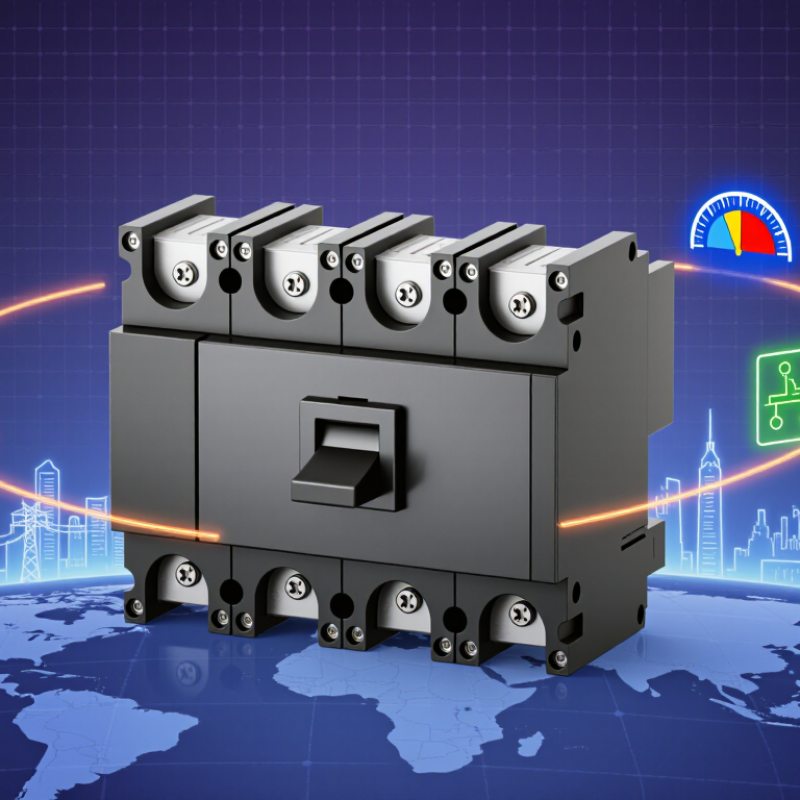
Define the Application and Required Circuit Breaker Type
Start with the equipment the breaker will protect, not a preferred amp rating. A pump motor, distribution panel, and resistance heater place different demands on a circuit breaker. Note the supply voltage, phase, frequency, normal current, and expected starting current. A motor may draw a brief surge at startup. Choosing only by its running current can cause nuisance trips.
Then define the protection needed. A molded case circuit breaker may suit a feeder or larger branch circuit, while a smaller device may fit a compact panel. Check the required number of poles and whether the breaker must provide overload protection, short-circuit protection, or both. Confirm its interrupting capacity against the prospective fault current at the installation point. This figure matters. A breaker with an inadequate rating may not safely clear a fault.
Look closely at the installation conditions: enclosure space, ambient temperature, ventilation, and cable size can affect the final selection. For example, a breaker inside a warm, crowded cabinet may not behave like one tested in open air. Verify trip settings and coordination with upstream and downstream devices using the equipment data and applicable local requirements. Do not guess. In practice, project notes can be incomplete, and a spreadsheet may miss a real startup surge. Have a qualified electrical professional review uncertain loads before ordering.
10 Molded Circuit Breaker Buying Tips for Global Buyers - Define the Application and Required Circuit Breaker Type
| Application | Typical Circuit | Common Breaker Type to Consider | Typical System Voltage | Indicative Current Range | Key Selection Check |
|---|---|---|---|---|---|
| Commercial building feeder | Distribution board or floor-level panel feeder | Thermal-magnetic or electronic-trip MCCB | Commonly 400/415 V AC in many IEC systems; 480Y/277 V AC in many North American systems | Often 100–630 A, depending on the load and design | Confirm load current, conductor ampacity, available fault current, and coordination with upstream and downstream devices. |
| Industrial motor feeder | Feeder supplying a motor starter or motor control center | MCCB selected for feeder protection, coordinated with the motor starter and overload protection | Commonly 400/415 V or 480 V AC; verify the actual system | Selected from the circuit design; motor full-load current alone does not determine the breaker rating | Account for motor starting current, starting method, conductor protection, and the required coordination or short-circuit protection scheme. |
| Transformer secondary distribution | Main or feeder protection on the low-voltage side of a transformer | MCCB with a trip unit suited to the expected fault level and protection requirements | Commonly 400/415 V or 480 V AC on low-voltage systems | Often 100–1600 A across a range of applications | Calculate or obtain the prospective short-circuit current at the installation point; check the breaker’s rated voltage and interrupting capacity. |
| Generator output circuit | Generator feeder or generator distribution panel | MCCB suitable for the generator’s output and the system’s protection scheme | As specified for the generator and distribution system | Based on generator rating, operating conditions, and circuit design | Check generator fault-current characteristics, neutral and grounding arrangement, and coordination with other protective devices. |
| Capacitor bank feeder | Feeder supplying power-factor correction capacitors | MCCB specifically suitable for capacitor switching duty, used with appropriate switching equipment | As specified for the capacitor bank | Based on capacitor current and the manufacturer’s application guidance | Consider inrush current, harmonic conditions, switching frequency, and any required derating or dedicated protection. |
| Photovoltaic AC distribution | Inverter output feeder on the AC side | AC-rated MCCB selected for the inverter circuit and installation conditions | As specified for the inverter and AC system | Based on inverter output current and applicable design rules | Verify AC voltage and frequency ratings, fault-current contribution, isolation requirements, and applicable local codes. |
| Marine or mobile equipment distribution | Feeder in a vessel, vehicle, or other mobile installation | MCCB with ratings and approvals appropriate to the installation environment | As specified for the onboard or mobile system | Based on the load and system design | Check vibration, temperature, humidity, enclosure requirements, and any required marine or transport approvals. |
| Critical-power distribution | Feeder serving essential loads or a transfer system | MCCB with a suitable electronic trip unit where adjustable protection or monitoring is needed | As specified for the facility | Based on the essential-load schedule and feeder design | Review selectivity, trip settings, remote indication or communications needs, and the consequences of an unwanted trip. |
| Outdoor or harsh-environment installation | Feeder installed in an outdoor or industrial enclosure | MCCB installed in an enclosure with an appropriate environmental rating | As specified for the circuit | Based on the protected load and conductors | Check enclosure protection, ambient-temperature derating, corrosion exposure, and the breaker’s permitted operating conditions. |
| Low-current branch or final circuit | Small branch circuit in a panelboard | Miniature circuit breaker (MCB) may be more appropriate than an MCCB | As specified for the system | Typically lower than many MCCB applications; choose from the circuit design | Do not specify an MCCB by default: confirm the required device category, mounting method, fault rating, and applicable standard. |
Selection note: Current ranges and voltage examples are indicative, not universal product limits. Final selection should be based on the system voltage, continuous load, conductor ampacity, prospective short-circuit current, required interrupting capacity, trip characteristics, installation conditions, and the applicable local standard. Confirm the exact ratings and coordination with a qualified electrical designer.