Global buyers rarely purchase aluminium paper as a single, uniform material. The term may describe aluminium foil laminated with paper, aluminium-coated paper, or metallised decorative paper. Each format behaves differently during printing, folding, sealing, storage, and recycling. This distinction is easy to miss.
This guide examines the top 10 types of aluminium paper used across packaging, food service, labels, insulation, gifts, and industrial applications. It considers foil thickness, paper grade, coating structure, barrier performance, surface finish, adhesive compatibility, and converting conditions. A thin household wrapping grade may look similar to a heavy pharmaceutical laminate, yet their moisture resistance and heat-sealing performance can differ sharply. Buyers should request technical data sheets, sample rolls, and batch-testing evidence before approving a supplier.
Aluminium Association President and CEO Heidi Brock has stated, “Aluminum is infinitely recyclable.” That principle matters, but the real outcome depends on the complete material structure. Adhesives, inks, coatings, and paper fibres can complicate recovery. Not every laminated product is equally recyclable. That is an uncomfortable detail, but responsible sourcing requires it.
The following overview connects material choice with practical purchasing decisions. It highlights where each aluminium paper type performs well, where it may fail, and which specifications deserve closer review. Cost alone is not enough. A cheaper roll can create waste through curling, poor adhesion, uneven coating, or inconsistent thickness. Global buyers need clarity, not attractive samples alone.
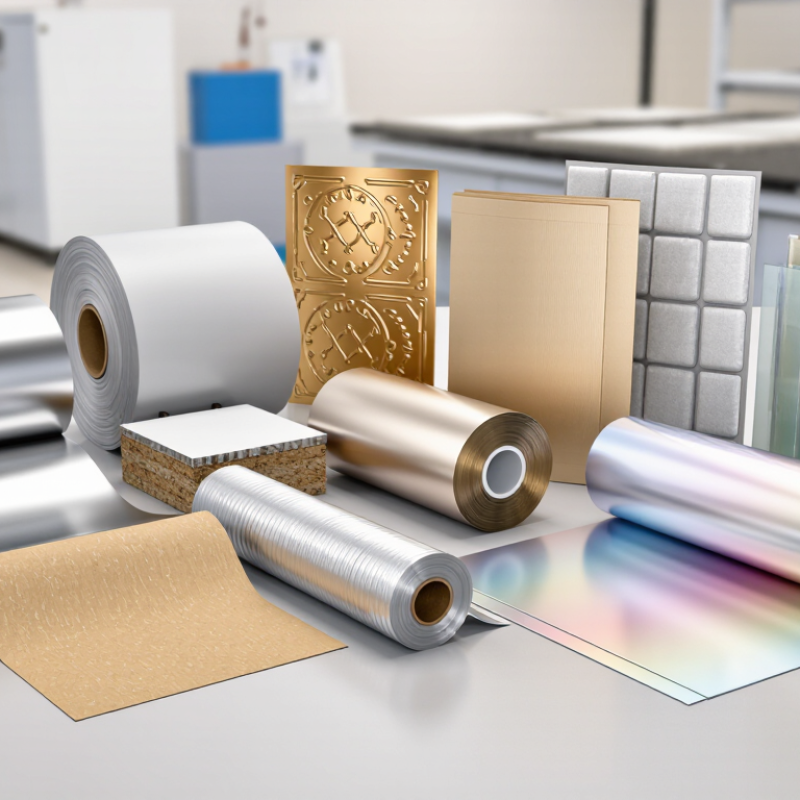
Aluminium paper is a paper-based material combined with aluminium foil or a thin metallized layer. It is not one standardized product. Its performance depends on structure, thickness, coating, and end use. In practical sourcing, buyers should request a cross-section drawing and a technical data sheet.
The common ten categories include foil-paper laminate, metallized paper, coated aluminium paper, PE-laminated foil paper, heat-sealable foil paper, moisture-resistant foil paper, grease-resistant foil paper, embossed foil paper, printable foil paper, and release-liner aluminium paper. These names can overlap. A supplier may classify one product by coating, while another classifies it by application.
Structure is the clearest starting point. A foil laminate offers stronger light and moisture protection. Metallized paper is lighter, but its barrier performance may be lower. Thickness also matters. Thin layers reduce material use, while thicker foil usually improves puncture resistance. Surface treatment determines whether the sheet accepts ink, adhesive, or heat sealing. Ask for basis weight, foil thickness, coating type, seal temperature, and test results.
Application creates another useful classification. Packaging grades may need controlled sealing and food-contact documentation. Decorative grades often prioritize gloss, embossing, and print quality. Industrial grades may require electrical insulation or stronger dimensional stability. In my experience, visual appearance can hide weak adhesion. A sample may look excellent, yet crack during folding. Testing under actual humidity and temperature is essential. Small differences in coating uniformity can become expensive production problems.
Global buyers use “aluminium paper” for several different constructions. The term is not always precise. The ten main types include plain aluminium foil paper, kraft foil laminate, bleached foil laminate, glassine foil paper, greaseproof foil paper, coated foil paper, embossed foil paper, metallised paper, release-liner foil paper, and heat-sealable foil paper. Each type changes barrier strength, print quality, stiffness, and recyclability.
Plain foil paper suits wrapping and moisture-sensitive goods. Kraft foil laminate adds tear resistance for industrial packs. Bleached laminate offers a cleaner printing surface. Glassine foil paper feels smooth and supports lightweight applications. Greaseproof foil paper resists oil migration. Coated foil paper improves ink adhesion. Embossed foil paper adds texture and visual depth. Metallised paper is thinner than foil, but it may provide weaker oxygen protection. Release-liner foil paper supports adhesive systems. Heat-sealable foil paper helps create closed edges without extra adhesive.
Material selection needs evidence. The International Aluminium Institute reported global primary aluminium production of about 70.6 million tonnes in 2023. That scale makes sourcing possible, but it does not make every format sustainable. The US EPA reports a 68.2% recovery rate for paper and paperboard in 2018. However, foil-paper laminates can complicate sorting and recycling. This is where specifications often become optimistic. Buyers should request foil thickness, paper grammage, seal temperature, migration data, and test results for moisture and oxygen transmission. The exact structure matters more than the product name.
Typical aluminium foil thickness by product type and application. Values show the midpoint of commonly used commercial thickness ranges in micrometres (μm); they are not company or brand data.
Thinner foil is generally selected for flexible packaging and decorative applications, while thicker foil is commonly used for food containers, insulation, and heavy-duty protection. Actual specifications may vary according to alloy, temper, coating, lamination, and end-use requirements.
Top 10 Types of Aluminium Paper for Global Buyers
Aluminium paper combines a thin aluminium layer with paper, coating, or another backing. Its properties vary by structure, temper, thickness, and surface treatment. Plain aluminium foil paper provides strong light, moisture, and oxygen protection. It suits food wraps, liners, and decorative packaging. Kraft-backed aluminium paper adds stiffness and tear resistance. It works well for insulation facings and industrial wrapping.
Glassine-backed aluminium paper has a smooth, semi-transparent surface. It supports labels, sachets, and lightweight wrapping. Coated aluminium paper improves printability and surface appearance. It is common in gift packaging and product sleeves. Embossed aluminium paper creates texture while hiding minor handling marks. Laminated aluminium paper combines aluminium with paper, film, or polyethylene for better sealing. Heat-sealable grades support pouches and inner packaging. Adhesive-backed aluminium paper simplifies mounting on panels and equipment. Perforated aluminium paper allows controlled airflow or steaming. Food-contact grades require documented testing and suitable barrier performance. Recycled-content aluminium paper can reduce resource demand, but its strength may vary.
Tips: Match the paper weight to the converting method. Check pinholes, seal strength, curl, and moisture resistance. Request a technical data sheet and sample roll. Confirm food-contact or recycling requirements in the destination market. Real factory trials matter. A specification can look perfect, yet fail during folding. Do not ignore storage humidity.
When comparing aluminium paper, start with the application, not the appearance. Packaging for dry foods may need a thin foil layer and strong moisture protection. Medical or industrial wrapping may require higher barrier performance and cleaner sealing. Decorative paper often prioritizes surface brightness, embossing, and print quality instead.
Check aluminium thickness, paper weight, coating type, and bonding strength. A practical comparison should include WVTR and OTR data, which measure moisture and oxygen transmission. For heat-sealable structures, record the sealing temperature, dwell time, and seal strength. Adhesive-backed aluminium paper needs stable tack on glass, cardboard, or metal surfaces. Test it after storage, not only on the first day.
Ask for samples.
A smooth sheet can still crack around folded edges. A heavier grade may feel stronger but increase shipping costs and waste. I have seen buyers compare only thickness, which is an incomplete method. Flexibility, tear resistance, print adhesion, and odor should also be checked. For global purchasing, request composition details, safety declarations, and batch consistency records. Recycling claims need careful review because paper, aluminium, coatings, and adhesives may require different processing routes. Temperature and humidity testing can reveal failures that laboratory images hide. One result may look excellent, yet the application may still expose weak sealing or poor creasing performance.
Global buyers often use “aluminium paper” to describe foil, laminated paper, or thin aluminium packaging stock. The correct grade depends on the product’s job. Alloy 8011 suits general wrapping and pharmaceutical-style forming. Alloy 3003 offers better strength for containers. Alloy 1235 supports high ductility and smooth foil production. Temper also matters. H14 is harder than O temper, while H18 improves stiffness but reduces formability. Small details matter.
Size decisions should include thickness, width, coil diameter, core size, and roll weight. Common foil thicknesses range from 6 to 200 microns. Tolerance must be agreed before production, not after delivery. ASTM B479 and EN 546 provide useful references for foil dimensions and quality controls. For food-contact applications, buyers should request migration testing, surface cleanliness data, and batch certificates. A certificate alone is not enough. Independent verification may still be sensible.
Supply reliability depends on more than price. The USGS Mineral Commodity Summaries 2024 estimated global primary aluminium output at about 70 million metric tons in 2023. This large market does not remove regional shortages. Freight distance, energy costs, minimum order quantities, and port conditions can change landed costs quickly. The International Aluminium Institute reports that recycling aluminium uses roughly 95% less energy than primary production. Recycled content can reduce impact, but it may affect alloy consistency or surface appearance. Buyers should confirm recycled content, origin, lead time, and traceability in writing. Forecasts help, though they are never perfect.
| No. | Aluminium Paper Type | Common Alloy Grades | Typical Temper | Typical Thickness | Common Width Range | Surface and Performance Features | Typical Global Applications | Relevant Standards and Compliance References |
|---|---|---|---|---|---|---|---|---|
| 1 | Household Aluminium Foil | 1235, 8011 | O, H18 | 9–20 μm | 200–1,600 mm | Bright or matte finish; good folding performance; moisture, light, and odor barrier. | Food wrapping, cooking, baking, catering, and household storage. | EN 546 series; ASTM B479; applicable food-contact rules in the destination market. |
| 2 | Pharmaceutical Strip Foil | 8011, 8021 | O | 20–30 μm | 200–1,200 mm | High barrier against moisture, oxygen, and light; controlled pinholes; suitable for heat-sealing lacquer or polymer coating. | Strip packs for tablets, capsules, powders, and medical products. | EN 546; ASTM B479; pharmaceutical packaging GMP and local regulatory requirements. |
| 3 | Blister Lidding Foil | 8011, 1235 | O, H18 | 20–25 μm | 150–1,200 mm | One-side printable and lacquerable; designed for sealing to PVC, PVC/PVdC, PP, or similar blister webs. | Push-through and peelable blister packs for pharmaceutical and healthcare products. | EN 546; ASTM B479; coating, ink, and pharmaceutical-packaging compliance requirements. |
| 4 | Aluminium Container Foil | 3003, 3005, 8011 | O, H22, H24 | 30–100 μm | 200–1,600 mm | Good formability, strength, and resistance to heat; may be supplied with lubricant, coating, or embossed texture. | Takeaway trays, catering containers, baking cups, and food-service packaging. | EN 546; ASTM B479; food-contact legislation and coating requirements of the importing country. |
| 5 | Converter and Laminating Foil | 1235, 8011, 8079 | O, H18 | 6–20 μm | 300–1,650 mm | Low-gauge material with controlled flatness, surface cleanliness, tensile strength, and pinhole level. | Flexible packaging, paper laminates, sachets, pouches, labels, and technical laminates. | EN 546; ASTM B479; laminate structure, adhesive, ink, and food-contact requirements where applicable. |
| 6 | Cable Wrapping Foil | 1100, 1235, 8011 | O, H18 | 20–100 μm | 300–1,600 mm | Electrical conductivity, shielding capability, tear resistance, and compatibility with polymer or adhesive layers. | Telecommunication cables, power cables, data cables, and electromagnetic shielding constructions. | EN 546; ASTM B479; cable construction specifications and applicable electromagnetic-performance requirements. |
| 7 | Insulation and HVAC Lamination Foil | 1100, 1235, 8011 | O, H18 | 7–30 μm | 500–1,600 mm | Reflective surface, vapor-barrier performance, heat resistance, and suitability for kraft paper, PE, or bubble laminates. | Building insulation, duct insulation, roofing membranes, and radiant-barrier systems. | EN 546; ASTM B479; building-product, fire, vapor-barrier, and insulation standards required by the destination market. |
| 8 | Decorative and Transfer Foil | 1235, 8011 | O, H18 | 10–20 μm | 300–1,500 mm | Smooth, bright, or colored surface; supplied for printing, coating, embossing, or transfer-film conversion. | Gift packaging, labels, decorative laminates, cosmetics packaging, and interior finishing materials. | EN 546; ASTM B479; coating, ink, migration, and end-use safety requirements where relevant. |
| 9 | Embossed Aluminium Foil | 1100, 3003, 8011 | O, H18, H22 | 30–100 μm | 300–1,600 mm | Patterned surface improves appearance, stiffness, grip, and surface area; available in smooth or coated forms. | Insulation facings, heat exchangers, decorative panels, packaging, and technical coverings. | EN 546; ASTM B479; product-specific dimensional, coating, and building-material requirements. |
| 10 | Heavy-Duty Technical Foil | 8011, 8079, 3003, 8006 | O, H22, H24 | 20–150 μm | 300–1,650 mm | Higher tear strength, controlled mechanical properties, good formability, and suitability for demanding converting operations. | Industrial laminates, battery and technical packaging, heat-exchanger components, and protective coverings. | EN 546; ASTM B479; application-specific mechanical, chemical, electrical, and safety specifications. |