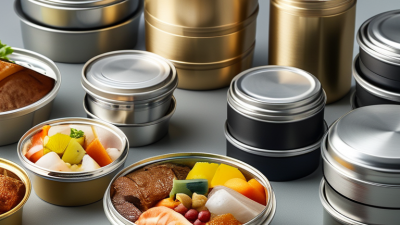
What Are the Top China Foil Container Manufacturers?

China has become a major manufacturing base for aluminum packaging, including household, catering, and food-service products. Among these products, the foil container remains widely used because it is lightweight, stackable, and suitable for heating and cold storage. However, choosing a dependable manufacturer requires more than comparing prices.

This guide examines leading China foil container manufacturers through practical purchasing criteria. These include material thickness, alloy consistency, mold accuracy, production capacity, and quality-control procedures. A reliable supplier should explain its raw-material sources and provide clear product specifications. It should also support sample testing, batch inspection, and stable delivery schedules. Details matter.

Manufacturers serving international buyers may offer different certifications, export experience, and customization options. Buyers should check whether a factory can produce the required rim shape, compartment design, lid fit, and surface finish. Packaging quality deserves attention too, especially when containers travel long distances in humid conditions. A damaged carton can affect otherwise acceptable products.

No ranking is perfect. Factory performance may change with new equipment, management decisions, or seasonal demand. Therefore, this overview focuses on transparent evaluation rather than unsupported claims. It considers production evidence, communication quality, technical responsiveness, and after-sales support. Buyers should still request recent samples and verify compliance with destination-market requirements. A low quotation can hide higher inspection, tooling, or transport costs. Careful comparison helps food businesses, distributors, and importers select a manufacturer that balances quality, capacity, and dependable service.
What Are the Top China Foil Container Manufacturers?

What Defines a Leading China Foil Container Manufacturer?

What Defines a Leading China Foil Container Manufacturer?

A leading China foil container manufacturer begins with verified production control, not impressive catalog photos. World Aluminium reported global aluminium production of about 70 million tonnes in 2023. That scale increases pressure on responsible sourcing and material efficiency. Manufacturers should document alloy grades, foil thickness, temper, and recycled content for every batch. Clear records matter. Buyers should also request ISO 9001 certification, food-contact test reports, and traceability procedures. These documents show how a factory manages risk beyond its sales promises.

Performance testing separates serious manufacturers from ordinary suppliers. A reliable plant checks pinholes, edge cracks, dimensional accuracy, and sealing performance during production. The European Aluminium Foil Association identifies pinholes and gauge control as important indicators of foil quality. For containers, practical tests should include oven resistance, stacking strength, leakage prevention, and rim consistency. A difference of only a few millimeters can affect automated filling lines. Experienced manufacturers usually provide samples from regular production, not specially prepared pieces. That detail is easy to miss.

Capacity is useful, but flexibility is more valuable. A strong supplier can adjust container sizes, lid compatibility, carton design, and delivery schedules without losing control. Reports from Smithers indicate continued growth in food and pharmaceutical packaging demand, increasing expectations for reliable supply and lightweight structures. Yet no factory is flawless. Machines require maintenance, and inspection can miss occasional defects. Buyers should examine corrective-action records, audit the facility, and test repeat orders. A manufacturer that admits weaknesses may be more dependable than one claiming perfection.

Which China Foil Container Manufacturers Are Most Recognized?

What Are the Top China Foil Container Manufacturers?

Which China Foil Container Manufacturers Are Most Recognized?

Recognition in China’s foil container sector depends on evidence, not factory size alone. Grand View Research estimates the global aluminum foil market reached roughly US$29 billion in 2023. Food packaging remains one of its strongest applications. This demand rewards manufacturers with stable forming accuracy, clean production areas, and reliable export documentation.

Look for suppliers that publish measurable capabilities. Important indicators include ISO 9001 quality systems, food-contact testing, batch traceability, and consistent container wall thickness. Independent audits matter more than polished websites. A serious manufacturer should provide recent test reports, production samples, and clear answers about alloy grades, temper, sealing performance, and carton protection. Small details reveal experience.

Export consistency matters.

Industry reports from Mordor Intelligence also identify prepared food and takeaway packaging as continuing growth areas. Recognized Chinese manufacturers usually support high-volume orders while maintaining repeatable dimensions across multiple production runs. They may offer standard sizes, custom tooling, and recyclable aluminum specifications. However, market reputation is not perfectly transparent. Some factories show impressive capacity but provide weak after-sales control. Others are less visible online yet perform reliably for long-term buyers. I would verify delivery records, inspection procedures, and defect rates before ranking any supplier. Percentages alone can mislead.

What Products and Specifications Do They Offer?

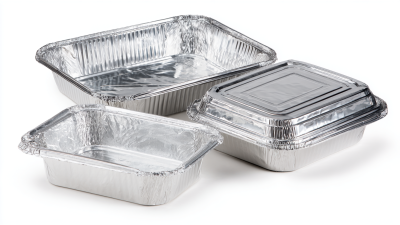
Leading China foil container manufacturers typically offer more than standard takeaway trays. Their product lines often include round bowls, rectangular meal boxes, compartment containers, lids, and oven-ready pans. Common capacities range from 200 milliliters to over 3,000 milliliters. Buyers can request different rim shapes, wall thicknesses, and embossed surfaces.

Material specifications deserve close attention. Many factories use food-grade aluminum foil, commonly between 0.04 and 0.12 millimeters thick. Thicker foil handles heavy meals better, while lighter foil reduces shipping costs. Some manufacturers provide smooth interiors for sauces and textured bottoms for improved stability. Matching paperboard lids, plastic lids, and peelable covers may also be available. Check temperature resistance carefully.

Experienced suppliers usually support custom dimensions, logo embossing, and packaging quantities. They may provide samples before mass production. Ask for foil alloy details, dimensional tolerances, sealing performance, and food-contact test reports. A useful factory should explain how it controls curling edges, pinholes, and uneven forming. These small defects can cause leakage during delivery.

I would not judge a supplier by catalog photos alone. A bright sample can hide weak corners. Request production samples from different batches. Inspect the rim with bare hands and test the container with hot soup. Documentation can also become outdated, so verify its issue date and testing scope. That extra check often reveals the real manufacturing standard.

How Do Chinese Foil Container Manufacturers Ensure Quality?

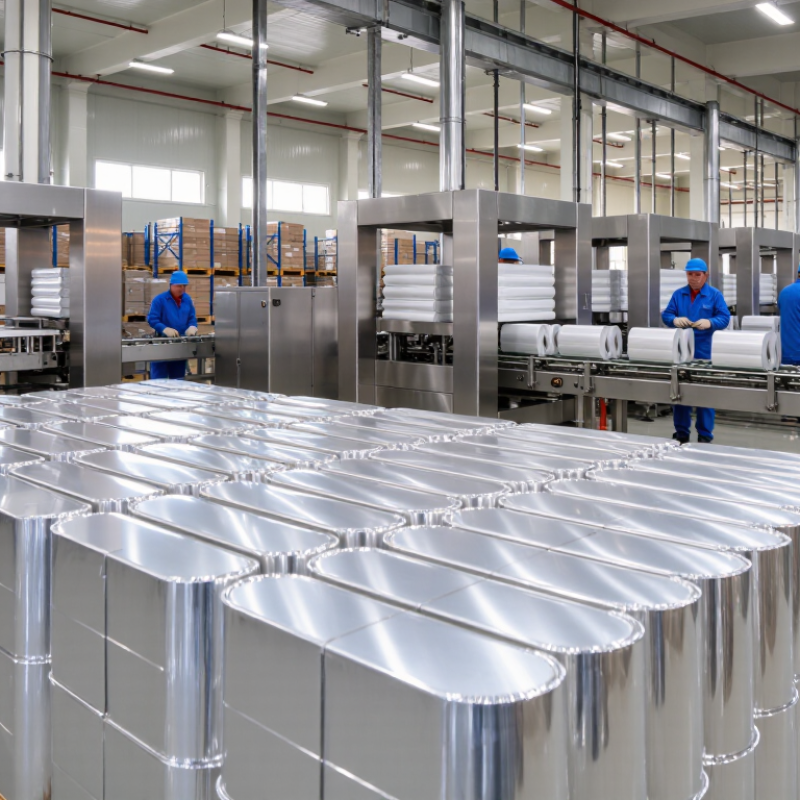
Chinese foil container manufacturers ensure quality through controlled materials, precise forming, and repeated testing. In supplier evaluations, buyers should examine more than polished factory photos. They should review aluminum alloy certificates, coating records, and production samples. The metal should feel uniform, with clean edges and consistent thickness.

Reliable factories use calibrated presses and inspect containers during production. Operators check dimensions, rim strength, surface marks, and nesting performance. A small sample may be tested for leakage, heat resistance, and deformation after filling. Food-contact materials also require traceable documentation and compliance with applicable market standards. Batch codes help connect finished containers with raw materials, machines, and inspection results.

Human experience still matters. An experienced technician can notice a faint wrinkle before instruments detect a serious forming problem. However, manual inspection alone is not enough. It can miss defects during busy shifts. Clear procedures, trained staff, and independent quality checks create stronger control. Factory audits should include warehouse conditions, not just production lines. Moisture, dust, and careless stacking can damage otherwise acceptable containers. Some manufacturers also retain samples from every batch for later comparison.

Quality is never perfectly automatic. A strong factory admits occasional variation and investigates it openly. Buyers should ask for corrective-action reports, not only test certificates. They should also confirm whether production samples match mass shipments. That detail is easy to overlook. Yet it often separates dependable manufacturers from suppliers focused only on appearance.

What Are the Top China Foil Container Manufacturers? — How Do Chinese Foil Container Manufacturers Ensure Quality?
Quality Dimension Common Industry Requirement Typical Control Method Quality Evidence Buyers Can Request Practical Importance
Raw Material Selection Food containers are commonly produced from food-contact aluminum alloys such as 3003 or 8011, subject to the agreed product specification. Incoming inspection of alloy grade, temper, thickness, surface condition, and supplier documentation. Material certificate, incoming inspection record, alloy and temper declaration, and lot identification. Supports forming performance, strength, corrosion resistance, and food-contact suitability.
Food-Contact Compliance Materials and finished containers should comply with the food-contact regulations required in the destination market. Review of raw-material declarations, migration testing where applicable, and production-process controls. Food-contact declaration, test report from a qualified laboratory, and compliance documentation for the target market. Reduces regulatory, safety, and customs risks for food packaging applications.
Foil Thickness Common foil-container specifications may use approximately 0.03–0.20 mm foil, depending on container size, wall strength, and forming design. Micrometer or automated thickness measurement at defined points across the coil and formed container. Approved specification, calibration records, inspection results, and certificate of analysis. Controls container rigidity, weight, forming behavior, and material consumption.
Dimensional Accuracy Length, width, depth, rim diameter, corner radius, and stackability must remain within the tolerances agreed on the technical drawing. Use of calibrated gauges, vernier calipers, height gauges, coordinate measurement, or automated vision inspection. Dimensional inspection report, approved drawing, first-article approval, and periodic inspection records. Ensures compatibility with lids, filling lines, ovens, transport packaging, and automated equipment.
Surface and Forming Quality Containers should be free from unacceptable cracks, splits, wrinkles, sharp edges, excessive dents, oil stains, and deformation. 100% visual inspection, edge inspection, sample checks, and process monitoring of forming dies and presses. Defect classification standard, inspection checklist, corrective-action report, and production photographs when required. Protects users, improves appearance, and prevents leakage or failure during handling.
Pinhole and Leakage Control Finished containers must meet the agreed pinhole and leakage acceptance criteria; critical food-packaging applications generally require no visible leakage. Visual inspection under suitable lighting, sample leak testing, and checks after forming or coating processes. Leak-test method, sampling plan, test results, and nonconformance records. Prevents product loss, contamination, and failures during cooking, storage, or transportation.
Cleanliness and Residue Control Containers should be free from loose particles, excessive forming lubricant, foreign matter, and residues that could affect food contact. Controlled lubrication, cleaning or air-blowing procedures, visual inspection, and periodic residue testing where required. Cleaning procedure, lubricant specification, hygiene records, and laboratory test results when applicable. Helps maintain food safety, product appearance, and compatibility with filling operations.
Mechanical Performance Strength and rigidity must be suitable for stacking, filling, transport, oven use, or other stated applications. Compression, stacking, rim-strength, burst, or application-specific performance tests based on the product design. Performance-test report, test method, sample identification, and acceptance criteria. Confirms that containers can withstand expected loads and handling conditions.
Heat and Application Suitability Products intended for baking, reheating, freezing, or food storage should be evaluated for the declared temperature and use conditions. Application simulation, dimensional checks after exposure, and review of alloy, coating, and packaging specifications. Application test report, temperature-use statement, and technical data sheet. Helps prevent warping, cracking, coating failure, or misuse in ovens and freezers.
Quality Management System Manufacturers commonly use documented procedures for purchasing, production, inspection, calibration, traceability, and corrective action. Internal audits, process audits, equipment calibration, staff training, and nonconformance management. Quality manual, process-flow chart, calibration certificates, audit records, and corrective-action reports. Creates repeatable production controls instead of relying only on final inspection.
Traceability Raw materials, production batches, inspection results, and shipment records should be linked through a batch or lot identification system. Barcode or batch coding, production records, warehouse controls, and retained samples. Lot-traceability record, packing list, production date, raw-material batch, and retained-sample policy. Allows faster investigation, targeted recalls, and clearer responsibility when quality issues arise.
Packaging and Shipment Protection Finished containers should be protected from crushing, moisture, dust, contamination, and movement during transportation. Use of suitable cartons, pallets, liners, separators, protective wrapping, and pre-shipment inspection. Packing specification, loading photographs, carton-marking details, and shipment inspection report. Preserves product quality after it leaves the manufacturing facility.
Customer and Third-Party Inspection Buyers may define approved samples, inspection levels, sampling plans, and acceptance criteria before mass production. Pre-production sample approval, in-process inspection, final random inspection, and independent laboratory testing. Golden sample, inspection plan, final inspection report, and third-party test certificate. Provides an objective basis for comparing suppliers and controlling recurring orders.
Important Purchasing Note Specification-dependent Exact alloy, thickness, tolerances, testing frequency, packaging, and regulatory requirements should be confirmed in the purchase specification. Signed technical data sheet, approved drawing, quality agreement, and purchase-order requirements. Industry practices and numerical tolerances vary by container design, end use, export market, and customer contract.

How Should Buyers Choose the Right Manufacturer?

Choosing the right China foil container manufacturer requires more than comparing unit prices. Buyers should examine production experience, material control, and delivery reliability. Ask about aluminum thickness, alloy grade, coating safety, and forming accuracy. A container that looks strong may still split during sealing. Request recent test reports and production samples before placing a large order.

Visit the factory online or in person. Check whether raw materials have batch records and whether operators inspect container rims. Reliable manufacturers should explain their quality system clearly, including leakage tests, dimensional checks, and carton-drop testing. They should also provide traceable documents for each shipment. Communication matters too. Slow replies can become serious problems when tooling changes or shipping dates move. A polished factory tour can mislead. I have learned that simple evidence often matters more than impressive presentations.

Tips: Compare samples from at least three manufacturers. Test them with your actual filling machine, lids, and heating process. Confirm minimum order quantities, mold ownership, replacement terms, and lead times in writing. Ask for a small trial order first. Do not choose the cheapest offer automatically. It may exclude tooling, inspection, or protective packaging. Leave room for honest review: even a capable supplier can make mistakes, and buyers should judge how openly those mistakes are handled.

What Are the Top China Foil Container Manufacturers?

How Should Buyers Choose the Right Manufacturer? Use this 100-point evaluation model to compare suppliers without relying on brand names or market claims.

Food-contact compliance and product consistency receive the highest weights because they directly affect safety, quality, and repeat production. Buyers should also verify tooling capability, minimum order quantity, lead time, total cost, and sustainability documentation before selecting a manufacturer.