What Are the Top China Industrial Aluminum Foil Suppliers?

China remains a major manufacturing base for industrial aluminum foil, supported by broad rolling capacity, integrated supply chains, and strong export infrastructure. The International Aluminium Institute’s industry data shows China as the world’s dominant primary aluminum producer. That scale matters. It can support large orders, stable alloy sourcing, and faster material coordination. However, production volume alone does not identify the best supplier.

Industry reports provide useful context. The World Bank’s Commodity Markets Outlook highlights aluminum price volatility and its effect on manufacturing costs. China Customs trade data can help verify export activity, product destinations, and shipment trends. Meanwhile, sustainability disclosures aligned with International Aluminium Institute guidance offer clues about energy use, recycled content, and carbon management. These sources are valuable, but they are not perfect. Public trade figures may combine different foil grades and applications.

A reliable supplier evaluation should examine more than factory size. Buyers should compare alloy grades, thickness tolerance, tensile strength, pinhole control, surface finish, and winding quality. Packaging details also matter. A well-protected coil should arrive dry, tight, and free from edge damage. Food-contact compliance may be essential for some applications, while battery, insulation, and HVAC projects require different technical evidence. Certifications, laboratory reports, production samples, and traceable inspection records deserve close attention. Not every impressive website reflects consistent manufacturing performance. This guide examines leading China industrial aluminum foil suppliers through capacity, quality systems, customization, delivery reliability, and documented customer experience. Some rankings remain subjective. The strongest conclusion should come from verified evidence, not promotional language.

What Are the Top China Industrial Aluminum Foil Suppliers?

What Defines a Leading China Industrial Aluminum Foil Supplier?

A leading China industrial aluminum foil supplier is defined by process control, not catalog size. During factory audits, I examine foil thickness, pinholes, edge quality, and winding tension. Small defects become serious when foil enters battery, heat-exchanger, or packaging lines. The International Aluminium Institute reported global primary aluminum production above 70 million tonnes in 2023. China supplied more than half of that output. Scale matters, but it does not automatically prove consistency.

Reliable suppliers connect raw-material control with documented testing. They should provide alloy certificates, mechanical-property results, surface inspection records, and traceability from ingot to finished coil. ASTM B479 and EN 546 requirements can help buyers compare industrial foil objectively. The U.S. Geological Survey’s Mineral Commodity Summaries 2024 also identified China as the world’s largest aluminum producer. This production base supports competitive capacity, yet buyers still need independent verification.

Responsive engineering support is another defining measure. A strong supplier can adjust foil temper, width tolerance, surface treatment, and core dimensions without vague promises. ISO 9001 systems are useful, but certificates cannot replace sampling and incoming inspection. I once treated a clean test report as sufficient evidence; that was a mistake. One overlooked telescoped coil later caused feeding instability. Suppliers deserve scrutiny, even when their documentation appears complete.

What Defines a Leading China Industrial Aluminum Foil Supplier?

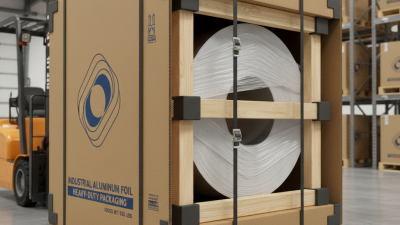
A capable supplier should support multiple industrial applications with consistent thickness control, reliable surface quality, and production flexibility.

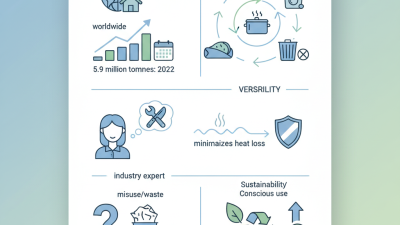
The chart shows common nominal thickness ranges used for industrial aluminum foil applications. Actual specifications vary by alloy, temper, coating, mechanical performance, and customer requirements. Reference frameworks include ASTM B479/B479M and EN 546.

Key Product Types and Industrial Applications

China’s industrial aluminum foil suppliers serve several demanding product segments. Common types include plain foil, coated foil, embossed foil, laminated foil, and electrolytic capacitor foil. Battery foil typically uses thin, high-purity aluminum with controlled surface roughness. Heat-exchanger foil needs strong corrosion resistance and stable forming performance. Coated foil supports insulation, sealing, and chemical protection.

The application range is broad. Battery manufacturers use foil as a current collector. HVAC producers form it into fins and heat-transfer components. Electrical companies use specialized foil in capacitors and cable shielding. Packaging remains important, but industrial buyers often require tighter specifications. These include thickness tolerance, tensile strength, elongation, wettability, and pinhole limits. Small defects can become large failures.

Market data shows sustained demand. Grand View Research estimated the global aluminum foil market at about US$27 billion in 2023, with continued growth expected through 2030. The International Aluminium Institute reported global primary aluminum production above 70 million tonnes in 2023. These figures do not measure industrial foil directly, but they indicate a substantial raw-material base. A reliable supplier should provide mill certificates, batch traceability, inspection records, and sample testing. Ask for actual production data, not only a polished brochure. One weakness is often overlooked: coating performance may change after storage. Temperature and humidity matter. Independent verification is still wise.

What Are the Top China Industrial Aluminum Foil Suppliers? - Key Product Types and Industrial Applications
Industrial Foil Type Typical Alloy / Temper Typical Thickness Typical Width Primary Performance Requirements Main Industrial Applications Common Quality Considerations Relevant Standards or Specifications
Packaging Foil 8011-H18, 8079-H18 0.006–0.030 mm 200–1,700 mm High barrier protection, low pinhole count, good dead-fold performance, clean surface Flexible laminates, sachets, lidding materials, food and beverage packaging, cosmetic packaging Thickness tolerance, pinholes, surface cleanliness, tensile strength, roll appearance EN 546; ASTM B479; customer laminate and food-contact requirements
Household Foil 8011-O, 1235-O 0.009–0.025 mm 250–1,500 mm Excellent flexibility, tear resistance, foldability, and resistance to moisture and light Food wrapping, baking, roasting, catering, household and institutional kitchens Edge quality, surface finish, odor, cleanliness, roll winding and easy-tear performance EN 602; ASTM B479; applicable food-contact regulations
Pharmaceutical Blister Foil 8011-H18, 8021-O 0.020–0.030 mm 200–1,650 mm High barrier against moisture, oxygen and light; strong adhesion to coating and heat-seal layers Tablet and capsule blister packs, pharmaceutical strip packaging, medical product packaging Pinhole control, surface cleanliness, coating adhesion, printability, controlled thickness EN 546; ASTM B479; pharmaceutical packaging and GMP-related specifications
Aluminum Battery Foil 1060, 1070, 1235; O or H18 temper 0.010–0.020 mm 300–1,600 mm High electrical conductivity, low surface defects, uniform thickness, strong coating adhesion Positive-current collectors for lithium-ion batteries and other rechargeable battery systems Surface cleanliness, burr control, pinholes, tensile strength, elongation, weldability EN 546; ASTM B479; battery-manufacturer technical specifications
Aluminum Capacitor Foil High-purity 1070, 1050; H18 or specialty temper 0.020–0.150 mm 100–1,500 mm High purity, controlled surface structure, suitable strength and electrical conductivity Electrolytic capacitor anode and cathode foils, power electronics and energy-storage components Purity, roughness, etching behavior, electrical properties, thickness consistency ASTM B479; IEC 60384-related component requirements; purchaser specifications
Heat-Exchanger Foil 3003-H14, 3003-H16, 3102-H14 0.08–0.30 mm 200–1,600 mm Good formability, thermal conductivity, corrosion resistance and brazing compatibility Automotive radiators, air-conditioning evaporators, condensers, HVAC heat exchangers Mechanical properties, corrosion resistance, clad-layer uniformity, flatness and fin-forming performance EN 485; ASTM B209; automotive and HVAC component specifications
Fin Stock Foil 1100, 1200, 3003; H14 or H16 0.08–0.20 mm 200–1,600 mm High formability, stable temper, good thermal conductivity and resistance to fin-cracking Finned-tube heat exchangers, residential air conditioners, refrigeration equipment Elongation, yield strength, flatness, surface quality, forming and louvering behavior EN 485; ASTM B209; equipment-maker forming requirements
Cable Shielding Foil 1235-O, 8011-O 0.010–0.050 mm 100–1,600 mm Electrical conductivity, flexibility, shielding effectiveness and stable lamination performance Telecommunication cables, data cables, control cables, signal and instrumentation cables Surface finish, tensile and elongation values, foil continuity, bonding and longitudinal strength EN 546; ASTM B479; cable-construction and EMC specifications
Food Container Foil 3003-H22, 8011-H22, 8006-H22 0.030–0.200 mm 300–1,600 mm Deep-drawing capability, stiffness, heat resistance, corrosion resistance and good forming behavior Takeaway trays, baking containers, food pans, pharmaceutical and catering containers Ear quality, cup and tray forming, surface cleanliness, lubricant compatibility and thickness uniformity EN 485; ASTM B209; applicable food-contact requirements
Insulation Foil 8011-O, 1235-O 0.009–0.100 mm 200–1,600 mm Reflective surface, moisture barrier, low emissivity and compatibility with composite insulation layers Building insulation, HVAC duct insulation, pipe insulation and industrial thermal barriers Reflectivity, pinholes, surface cleanliness, bonding performance and roll flatness EN 546; ASTM B479; insulation-system performance specifications
Decorative and Embossed Foil 1050-O, 1100-O, 8011-O 0.020–0.200 mm 300–1,500 mm Consistent appearance, embossing response, formability and resistance to surface staining Interior decoration, ceiling systems, wall panels, labels, nameplates and architectural finishes Color and gloss consistency, embossing depth, surface defects, coating adhesion and flatness EN 485; ASTM B209; architectural coating and finishing specifications

Note: Dimensions and alloy combinations represent commonly used industrial ranges. Final requirements vary according to conversion equipment, end-use regulations, temper, coating or lamination structure, and purchaser specifications.

How to Evaluate Supplier Quality, Capacity, and Certifications

When evaluating China industrial aluminum foil suppliers, start with measurable quality, not attractive samples. Request specifications for alloy, temper, thickness tolerance, width accuracy, pinholes, tensile strength, and surface finish. Ask for evidence. A capable supplier should provide recent inspection reports, batch records, and traceability from raw material to shipment. Samples must reflect normal production, not specially prepared material.

Capacity requires more than a stated monthly output. Check rolling mill sizes, annealing equipment, slitting limits, and available production shifts. Confirm whether the supplier can maintain stable quality during larger orders. Review typical lead times, minimum order quantities, maintenance plans, and backup equipment. A site audit, video inspection, or independent factory assessment can reveal practical limits. Do not guess. Production capacity often looks stronger on paper than on the factory floor.

Certifications should be verified by certificate number, validity period, issuing organization, and exact scope. ISO 9001 supports quality management, but it does not guarantee perfect foil. For food, pharmaceutical, or other regulated applications, request applicable material declarations and test reports. Check whether documents match the manufacturing site and product grade. One weakness deserves attention: many buyers inspect certificates carefully but overlook complaint handling. Ask how nonconforming rolls are isolated, investigated, replaced, and documented. Reliable suppliers explain these steps clearly, accept reasonable audits, and disclose limitations before contracts are signed.

Major China Supplier Profiles and Manufacturing Strengths

China’s leading industrial aluminum foil suppliers usually fit three profiles: integrated smelters, specialized rolling mills, and export-focused converters. The International Aluminium Institute reported about 41.5 million tonnes of Chinese primary aluminum production in 2023. This upstream scale supports stable foil supply and flexible alloy planning.

Large integrated mills often control casting, rolling, annealing, slitting, and packaging. Their strength is consistency across heavy-duty foil, battery foil, heat-exchanger foil, and pharmaceutical-grade materials. Specialized converters usually serve smaller orders and provide tighter width tolerances. Export-focused suppliers may offer stronger documentation, multilingual support, and container planning. However, impressive capacity figures do not prove actual delivery performance. A factory visit, recent inspection records, and trial orders remain necessary.

Tips: Ask for alloy certificates, thickness records, pinhole results, and edge-quality photos. Check whether testing occurs in-house or through an independent laboratory. The 2024 International Aluminium Institute statistics show China remains the largest primary aluminum producer, yet quality can vary between plants. I would compare defect rates, not only quoted prices. Also review moisture protection inside each export package. One overlooked detail can damage an otherwise reliable shipment.

Selecting the Right Supplier for Your Industrial Requirements

What Are the Top China Industrial Aluminum Foil Suppliers?

Selecting the right supplier requires more than comparing prices. A reliable supplier should match your alloy, foil thickness, roll width, temper, and packaging requirements. For example, a food-processing line may need 0.02 mm foil with stable pinhole control. A battery component manufacturer may require tighter thickness tolerance and clean slitting.

Request production samples before signing a large contract. Check the foil surface under bright light. Look for wrinkles, oil stains, edge cracks, and uneven winding. Ask for inspection records, material certificates, batch traceability, and quality-control procedures. Factory experience matters, but it does not replace current evidence. A supplier may have modern equipment, yet inconsistent communication can still create costly delays. This is where many buyers need more reflection: the lowest quotation often excludes testing, special packaging, or corrective support.

Tips: Compare suppliers using the same technical specification. Confirm monthly capacity and realistic lead times. Ask how rejected rolls are handled. Review packaging photos, especially for humid shipping routes. Test samples in your actual machinery, not only in a laboratory. Clear answers are valuable. Written records are better.