How to Choose the Right Aluminium Food Container Supplier
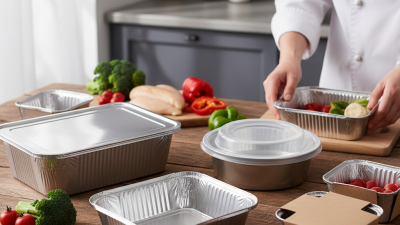
Choosing the right aluminium food container supplier is not simply about comparing prices. It involves checking materials, production control, delivery reliability, and communication quality. A dependable supplier should explain alloy grades, wall thickness, sealing performance, and intended food-contact applications clearly. Small details matter. A slightly uneven rim can affect stacking, lid fit, and customer experience.
Experienced buyers usually request product samples before signing a long-term agreement. They inspect the container by hand, test its shape after heating, and review the packaging condition. They also ask for material reports, food-contact documentation, factory audit records, and traceable batch information. Requirements may differ between countries, so suppliers must provide accurate and current compliance documents. Clear evidence is stronger than confident promises.
Price still matters, but it should not lead every decision. Cheap samples can mislead. Look closer. Check the supplier’s minimum order quantity, tooling charges, production capacity, defect-handling process, and normal lead time. Ask how quickly the team responds when cartons arrive damaged or dimensions are inconsistent. These practical questions reveal experience better than polished brochures. No supplier is perfect, and even a well-managed factory may face delays or quality variations. The important point is whether problems are reported honestly and corrected systematically. This guide explains how to evaluate an aluminium food container supplier with greater confidence, balancing quality, safety, cost, and long-term cooperation.
Define Container Requirements and Compare Common 30–100 μm Foil Gauges
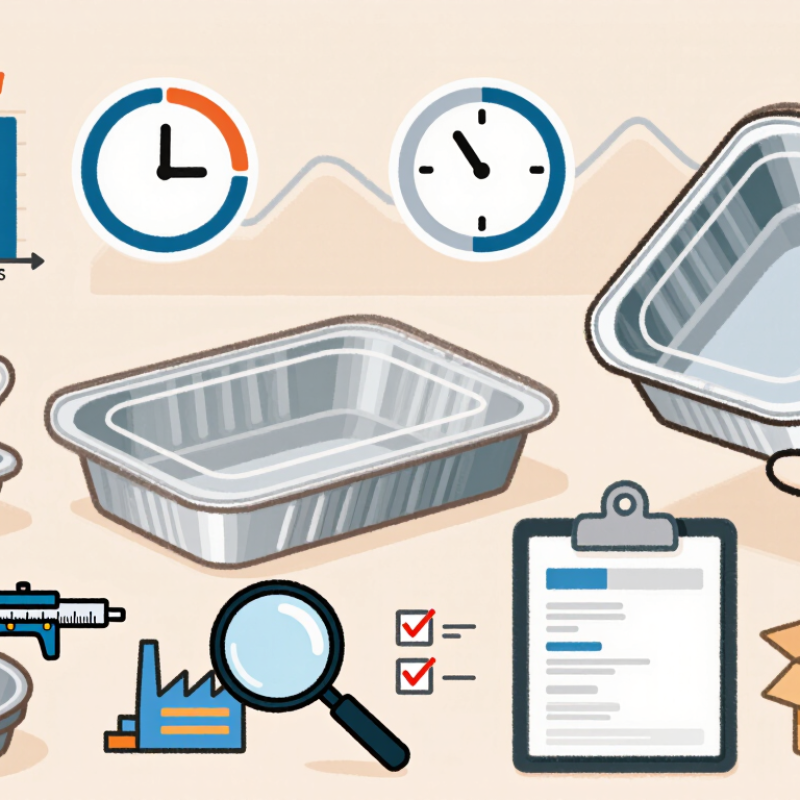
Define the container before requesting quotes: measure the rim, depth, capacity, and lid fit, then specify food temperature, transport time, and stacking load. Thickness changes performance. A 30 μm wall may suit dry, light portions, while 60–100 μm stock offers more resistance to denting and handling damage. These are starting points, not guarantees; alloy, temper, container geometry, and forming quality matter too. Ask suppliers for a stated thickness tolerance and sample containers filled with your actual product.
For scale, the Aluminum Foil Association’s technical guidance places foil thickness across a broad range, from roughly 6 μm to more than 150 μm; food containers therefore sit toward the heavier end. The International Aluminium Institute reports that about 75% of all aluminium ever produced remains in use, reflecting the metal’s recovery value, though actual recycling depends on local collection and sorting. Compare quotes on usable capacity, wall and base thickness, rim consistency, and leak or crush tests—not price per piece alone. A thin base can surprise you. I would also inspect several samples, because one neat container tells you very little about batch consistency.
Verify Food-Contact Compliance and Traceability for Each Production Batch
How to Choose the Right Aluminium Food Container Supplier
A reliable supplier should prove food-contact compliance for every production batch, not only during the first approval. Request the material grade, coating details, migration test results, and a current declaration of compliance. These documents should match the containers delivered to your facility. A polished certificate can still hide a traceability gap.
Ask how each batch is identified. The code should connect raw aluminium coils, coatings, forming dates, inspection results, and shipment records. Keep samples from incoming deliveries, especially when containers will hold oily, acidic, or hot foods. In my experience, small record differences often reveal bigger process weaknesses. They may be harmless. They may not. A practical audit should include factory visits, document checks, and questions for production staff, not only managers.
Tips: Check batch codes on cartons and containers. Compare certificates with purchase specifications. Confirm testing uses your actual food conditions. Ask how nonconforming batches are isolated. Review records before approving shipment. Suppliers should explain changes in alloy, coating, equipment, or subcontractors. Local requirements may differ, so obtain qualified regulatory advice before launch. A missing signature is easy to correct; an unclear production history is much harder.
Compare Tooling, Capacity, Lead Times, and Minimum Order Quantities
Choosing an aluminium food container supplier starts with the tooling.
Ask whether your container needs a new mould or can use an existing one. Request drawings, sample dimensions, and details about cavity count. A sample should sit flat on a workbench, with rolled edges free of sharp burrs. Tooling ownership and maintenance costs also matter. Get both in writing. A low quoted price may exclude important adjustments.
Capacity is not just a monthly figure.
Ask how many presses are available, what sizes they run, and whether production is shared with other orders. A supplier may promise volume but struggle during seasonal peaks. Request a realistic output estimate for your exact container size and thickness. If possible, check production records or speak with a reference customer. Numbers need context.
Lead times should include tooling, sample approval, production, and shipping—not just the factory run.
Ask what could delay each stage, such as material availability or a queue for press time. Minimum order quantities can vary by size and packaging; confirm whether a mixed-size order is possible. Smaller trial batches reduce risk, though unit costs may rise. That trade-off is easy to overlook. One more detail: ask how rejected samples are handled. Suppliers may not volunteer it, and I have found that assumption can cause avoidable rework.
Evaluate Recycling Claims: Aluminum Recycling Uses About 5% of Primary Energy
When choosing an aluminium food container supplier, ask for evidence behind its recycling claims. The International Aluminium Institute reports that recycling aluminium uses about 5% of the energy needed to produce primary aluminium. That is a substantial difference, but it does not prove that every container contains recycled metal. Ask suppliers to separate recycled-content figures from claims about recyclability. Request dated data, the calculation method, and documentation for the specific product range. Vague phrases like “eco-friendly” are not enough.
Check the container itself. A clean, uncoated tray may fit local recycling systems more easily than one with mixed materials or food residue. Small details matter. Ask whether lids, coatings, and attached labels affect sorting. The US Environmental Protection Agency’s national recycling data can help explain why local collection and processing matter; recycling access varies by community. A supplier’s technical sheet should identify material composition and explain any design features that may complicate recovery. Be cautious with broad percentages that lack a clear boundary or source. Even a strong claim can leave out collection losses. I would want figures tied to the actual product, not just aluminium in general.
How to Choose the Right Aluminium Food Container Supplier
Evaluate recycling claims carefully: producing recycled aluminium uses about 5% of the energy required for primary aluminium production.
The chart uses a normalized energy index: primary aluminium production is set at 100, while recycled aluminium production is approximately 5. This represents an estimated energy saving of about 95% when recycled aluminium replaces primary aluminium.