10 Best Foil Containers With Lids for Bulk Buyers

For restaurants, caterers, meal-prep businesses, and food manufacturers, packaging decisions affect daily workflow. A dependable foil container with lid can help protect portions, simplify transport, and make storage more organized. Yet bulk purchasing raises practical questions beyond price. Will the lid fit securely? Does the container suit the portion size, menu, and equipment? Can staff stack and handle it without slowing service?

This guide examines ten options with bulk buyers in mind. It considers capacity, construction, lid style, pack quantity, and likely use cases, from individual baked meals to larger catering trays. Compatibility matters: a lid designed for one container may not fit another, even when the dimensions seem close. Buyers should also check supplier specifications for temperature limits and intended use rather than assuming every foil product performs the same way. Small details matter.

A low unit price can look convincing until loose lids, crushed corners, or awkward storage create extra work. Not every operation needs the heaviest gauge or the largest pack. The better choice depends on menu, handling, storage space, and ordering frequency. This comparison aims to make those trade-offs easier to judge, while recognizing that product details and availability can change. Before placing a large order, verify current specifications and consider testing a sample. A little caution helps.
10 Best Foil Containers With Lids for Bulk Buyers

Key Features of Foil Containers with Lids for Bulk Buyers

For bulk buyers, the best foil containers balance sturdy construction with practical storage. Check the foil thickness and rim shape: a firmer rim is easier to handle when trays are filled, while thin walls may bend under heavier portions. Fit matters. Lids should sit evenly without forcing the edges, and the supplier should specify whether they are foil, paperboard, or plastic. Not every lid seals tightly, so avoid assuming the package is leakproof.

Choose sizes that match your menu and packing routine. A few standard capacities can simplify portioning, but measure the usable interior rather than relying only on a listed volume. Check the case count, carton dimensions, and stacking stability before ordering. A low unit price can lose its appeal if cartons take too much storage space or arrive with crushed corners. Small detail, big nuisance.

Ask for written guidance on oven, freezer, and food-contact use; suitability depends on the specific container and lid. If hot food will be packed, confirm the lid’s temperature limits separately. Requesting a sample case can reveal loose-fitting lids, sharp edges, or inconsistent shapes before a large purchase. It takes time. Still, specifications may not tell the whole story, and testing a filled container is a sensible extra step.

How to Compare Capacity, Foil Gauge, Lid Fit, and Heat Resistance

Bulk buyers should compare usable capacity, not just the pan’s outside dimensions. A deep 9-by-13-inch tray may hold less than expected once food and sauce are added. Check the stated volume and test-fill a sample before ordering a full case. The European Aluminium Foil Association defines aluminium foil as rolled material up to 0.2 millimetres thick. That is a broad definition, not a guarantee of strength: formed-container gauge, rim shape, and food weight all affect performance. Thin trays can flex when lifted hot.

Lid fit matters during stacking and delivery. Look for a lid designed for the exact rim profile, then test several trays for gaps and rocking. A tight fit can reduce spills, but it does not make a container leakproof. For oven use, follow the supplier’s stated temperature limit; foil thickness alone cannot confirm heat resistance. USDA FSIS guidance recommends keeping hot food at 140°F (60°C) or above, so plan transport and holding around the food’s safe temperature, too.

Tips: Order samples before committing. Fill one with a realistic portion, crimp the lid, stack two trays, and move them as staff would. A simple test often reveals a loose corner. I would also record the usable fill line, since brim capacity can be misleading.

Ten Foil Container Types for Different Bulk-Buying Needs

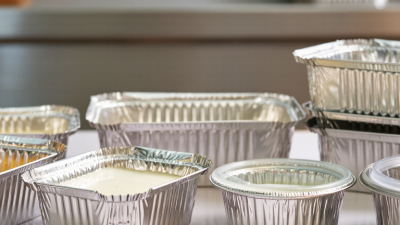
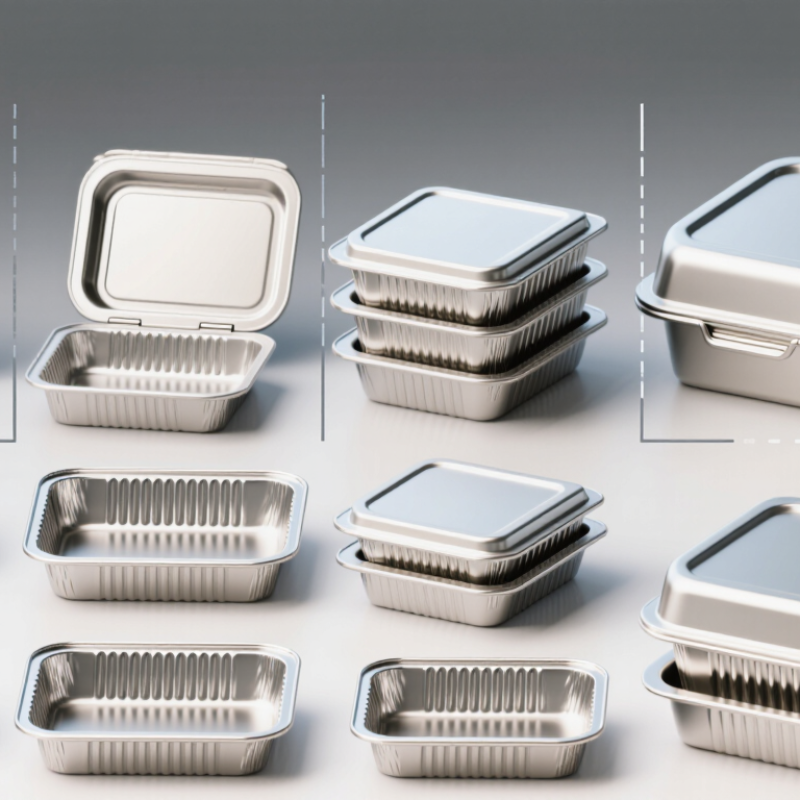
Bulk orders work best when container shape matches the food and service routine. Shallow rectangular entrée trays cool and stack neatly. Deep roast pans hold saucy meals with less spill risk. Two- and three-compartment trays keep sides apart, though their dividers reduce usable space. Round foil pans suit pasta, casseroles, and shared dishes. Small round pans handle dips or individual desserts. Check lid fit carefully.

Loaf pans are useful for breads and compact baked dishes. Pie tins support pastry sales and fit flat lids. Square cake pans give brownies clean edges and pack efficiently. Full-size steam-table pans serve buffets, while half-size versions suit smaller counters. Hinged-lid foil takeout trays speed packing when staff are busy. Ten types, different jobs. A common buying mistake is choosing by price alone; rim shape and capacity matter too. Compare the usable interior dimensions, not just the top width. Ask suppliers for sample lids before ordering a full case. Lids can flex, and a close fit is not always a secure fit. Even careful buyers sometimes miss this. Check how the containers stack in your storage area, since tall piles can wobble on narrow shelves.

10 Best Foil Containers With Lids for Bulk Buyers

Typical capacity benchmarks help match container types to bulk-buying needs, from individual portions to large catering batches.

Capacities are approximate and can vary with pan depth and dimensions. Steam-table pan values reflect common nominal capacities; bakeware values are rounded estimates. Check product specifications before ordering in bulk.

How to Match Container Styles to Food-Service Applications

Bulk buyers should match foil-container shape to the food’s journey, not just its portion size. The National Restaurant Association’s 2024 State of the Restaurant Industry projected U.S. restaurant sales of $1.1 trillion and 15.7 million jobs. That scale makes dependable packing important. A shallow rectangular pan suits roasted vegetables or baked pasta; a deeper round pan contains broths and sauced dishes. Fit matters more.

Check the lid against the service route. Tight-fitting board or foil lids can help with short counter-to-car trips, while a clear dome gives customers a view of baked goods. For delivery, test the actual filled container: tilt it gently, stack several units, and check for leaks or crushed corners. A vented lid may reduce trapped steam on crisp foods, but can let hot dishes cool faster. Trade-offs are real.

For high-volume menus, compartment trays separate sides and sauces, though dividers can reduce usable space. Match the pan depth to serving tools, and confirm that both container and lid are rated for the intended oven or holding conditions. Do not assume every lid is oven-safe. The U.S. Food and Drug Administration’s Food Code offers food-safety guidance for food-contact equipment; operational checks still matter. One weak point: sample testing may miss rushed packing during a busy shift. Test with staff, real portions, and stacked orders before buying by the case.

10 Best Foil Containers With Lids for Bulk Buyers — How to Match Container Styles to Food-Service Applications
Container Style Typical Capacity Best-Fit Applications Common Lid Pairing Bulk-Buying Considerations
Round cake pan About 8–10 in. diameter; capacity varies by depth Layer cakes, quiches, deep-dish pies, and round casseroles Flat foil-board lid or a taller dome lid for toppings Check pan depth and lid clearance; choose a dome when food extends above the rim.
Pie pan Typically 8–10 in. diameter; shallow profile Fruit pies, custard pies, tarts, and take-home baked goods Flat foil-board lid or clear lid designed for the pan profile Match the lid to the outer rim diameter and allow room for crust edges.
Loaf pan Commonly around 1–2 lb loaf size Bread, meatloaf, pound cake, and individual baked entrees Foil-board lid or a compatible snap-on lid Useful for portioned sales; compare usable length, width, and depth rather than nominal capacity alone.
Small rectangular takeout pan Approximately 1–2 lb food capacity Side dishes, single portions, desserts, and prepared meals Flat foil-board lid or compatible clear plastic lid Confirm whether the lid is intended for hot filling, chilled display, or transport; check food-contact and temperature guidance.
Square or rectangular casserole pan Commonly about 8 × 8 in. to 9 × 13 in.; depth varies Brownies, lasagna, baked pasta, casseroles, and catering sides Flat foil-board lid; dome lid for higher food loads Compare usable base area and rim dimensions to portioning and oven requirements.
Half-size steam-table pan, shallow Approx. 12.8 × 10.4 in.; about 2.5 in. deep Buffet sides, roasted vegetables, baked pasta, and moderate-volume service Flat foil-board lid or compatible dome lid Fits half-size steam-table setups when dimensions are compatible; verify depth and lid style before ordering.
Half-size steam-table pan, deep Approx. 12.8 × 10.4 in.; about 4 in. deep Deeper casseroles, bulk sides, braised foods, and transport portions Dome lid or deep-profile foil-board lid Greater depth adds food capacity but may require more storage space and a taller lid.
Full-size steam-table pan Approx. 20.8 × 12.8 in.; available in several depths Large catering batches, buffet service, and high-volume hot-food holding Full-size flat or dome lid matched to pan depth Confirm compatibility with the service well or chafing setup; filled pans can be heavy and may need support during handling.
Compartmented meal tray Typically 2–3 compartments; capacity depends on tray layout Prepared meals, airline-style meals, and separated entrees with sides Close-fitting foil-board lid or compatible clear compartment-tray lid Choose compartment sizes around the menu; confirm that the lid seals across the full tray rim.
Oval roasting pan Small to large formats; capacity varies substantially Roasts, whole poultry, baked entrees, and holiday or event meals Foil-board lid or high-dome lid Measure the food item as well as the pan; a dome helps prevent contact with delicate toppings or raised foods.

Capacities and dimensions are typical format references, not universal specifications. Exact measurements, lid fit, oven-use limits, and temperature suitability vary by product; verify the manufacturer’s technical details before placing a bulk order.

Bulk Ordering Factors: Case Quantity, Cost, Storage, and Supply

Bulk buyers should compare foil containers with lids by usable capacity, not case price alone. A case of 500 may look affordable, but oversized pans can leave food shifting during delivery. Check the lid fit, rim shape, and stated capacity before ordering. A snug lid helps reduce spills, though it does not replace careful packing. Small details matter.

Tips: Request a sample case when possible. Stack a few filled containers, then check whether lids stay secure. Measure the carton, too; storage shelves are often tighter than expected.

Calculate the cost per container, including freight and any damaged or unusable pieces. Case quantities vary, so confirm the exact count and whether lids are packed separately. A lower unit price may require more storage space and tie up cash for months. Keep cartons dry and away from heavy items that could bend the rims. Supply reliability also matters: ask about typical lead times and whether the same size is regularly available. I would not rely on one large order without checking demand first. Forecasts are imperfect, and mine can be, too. A modest buffer helps, but excessive stock can occupy valuable kitchen space.